


Choosing the right type of treatment is a big decision — and understanding the differences between inpatient and outpatient rehab can help you make the best choice for your situation. Both offer strong support for recovery, but the structure, intensity, and day-to-day experience are very different. Knowing what to expect can make the process feel less intimidating and more manageable.
Here’s a breakdown to help you understand the key differences and figure out what might fit your needs best.
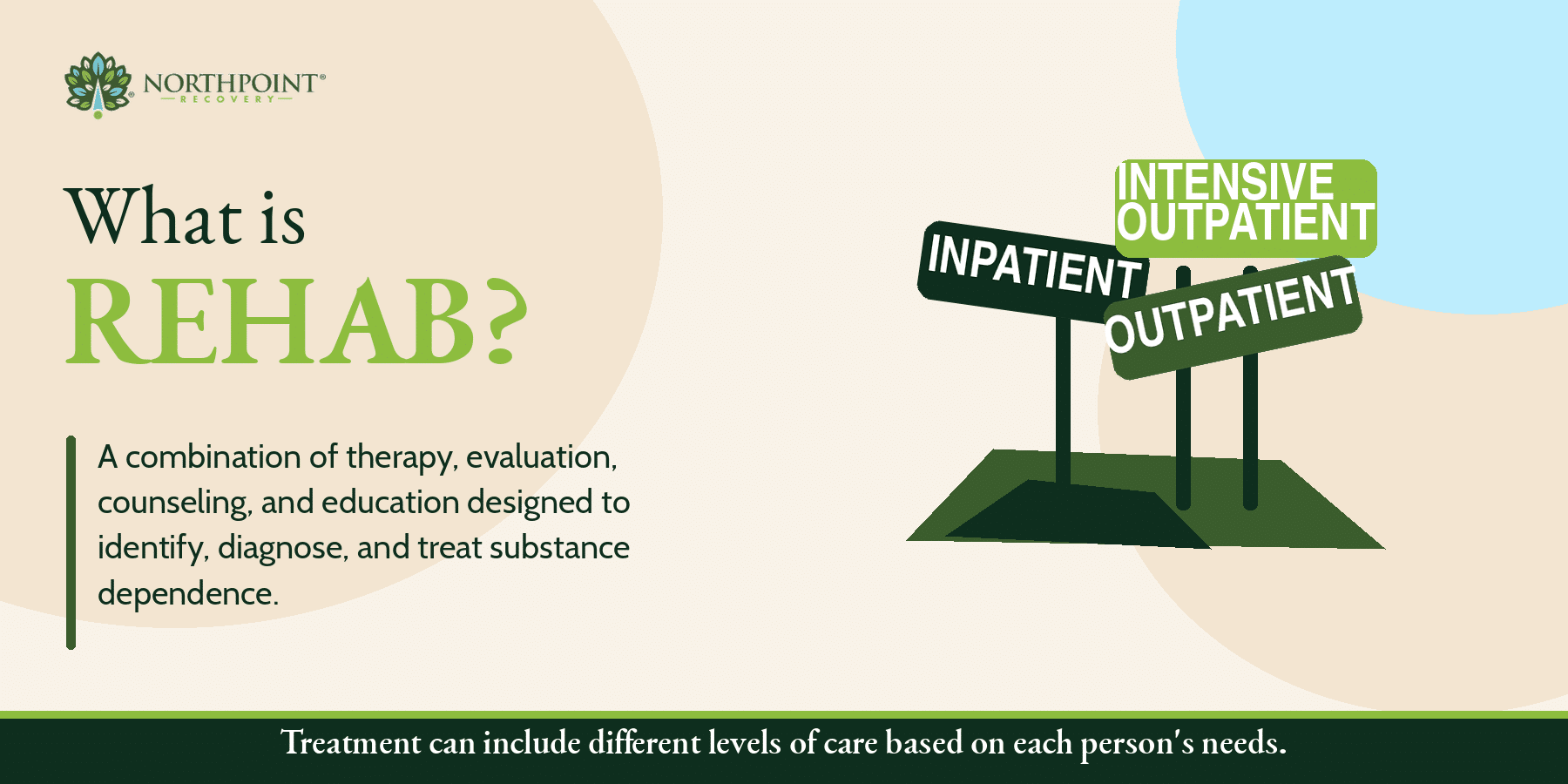
What is Inpatient Rehab?
Inpatient rehab (also called residential treatment) involves living at a treatment center for a set period of time. It’s a highly structured environment where your main focus is on healing. Every day follows a schedule filled with therapy, support groups, and healthy activities, all designed to help you build a strong foundation for recovery.
This level of care is usually recommended for people with more severe addictions, co-occurring mental health issues, or unstable living environments where staying sober would be difficult.
How Does Inpatient Rehab Work?
Inpatient rehab works by placing you in a structured, live-in treatment environment where your entire focus is recovery. From the moment you arrive, you follow a daily schedule built around individual therapy, group counseling, educational sessions, and wellness activities. Medical and clinical staff are available around the clock to monitor your health, manage withdrawal symptoms, and adjust your treatment plan as needed.
Some key traits of inpatient rehab include:
Most inpatient stays begin with a medical detox phase to safely clear substances from your system. Once stabilized, you move into the core treatment program, which typically combines evidence-based therapies like cognitive behavioral therapy (CBT) with peer support and life skills development. The goal isn’t just to stop using — it’s to understand the root causes of addiction and build the tools to stay sober after you leave.
24/7 support from medical and clinical staff
A full daily schedule of therapy, education, and activities
Time away from triggers, stress, and distractions
Focus on building new habits and coping skills in a safe space
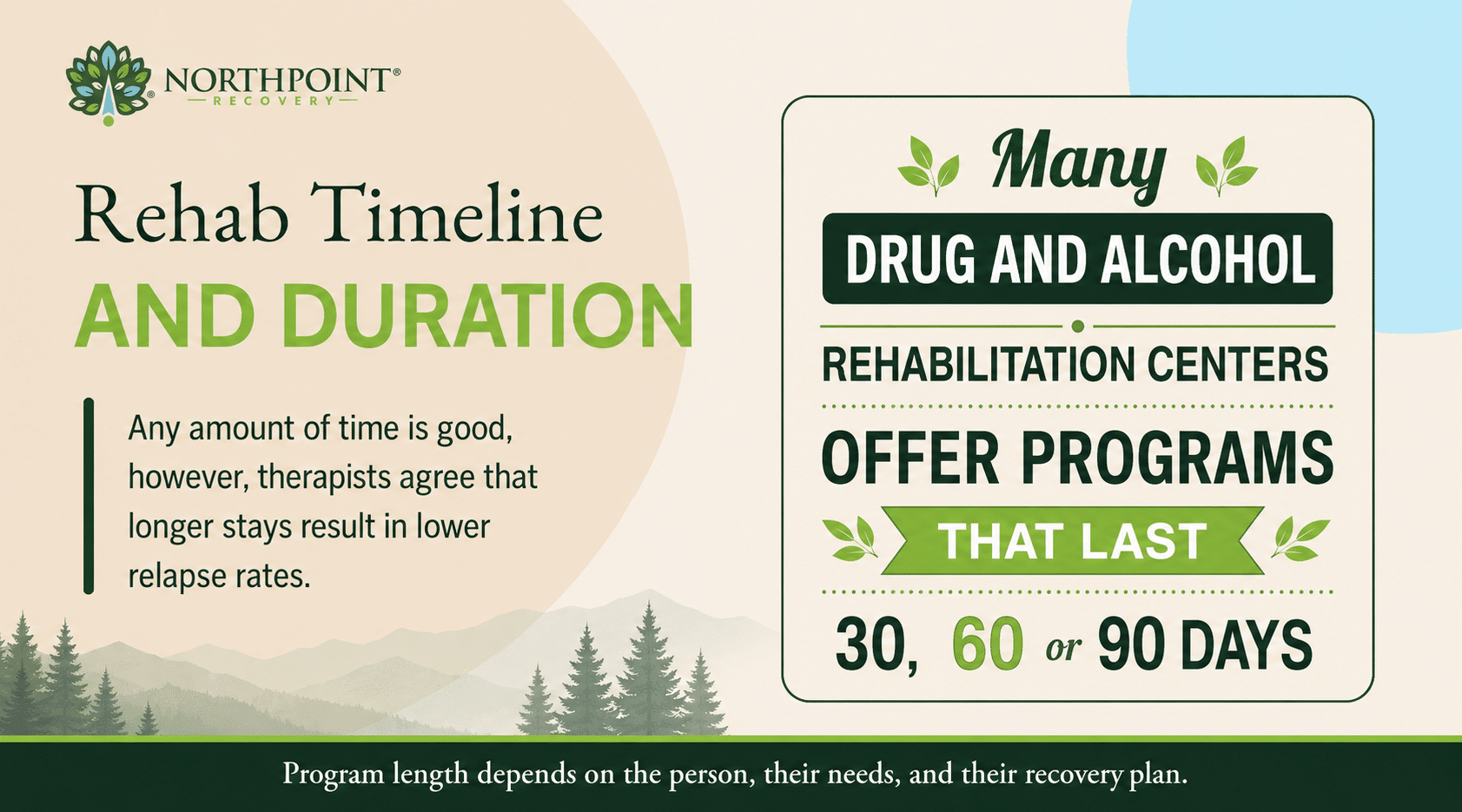
Stays typically range from 30 to 90 days, depending on the severity of your addiction and how you progress in treatment.
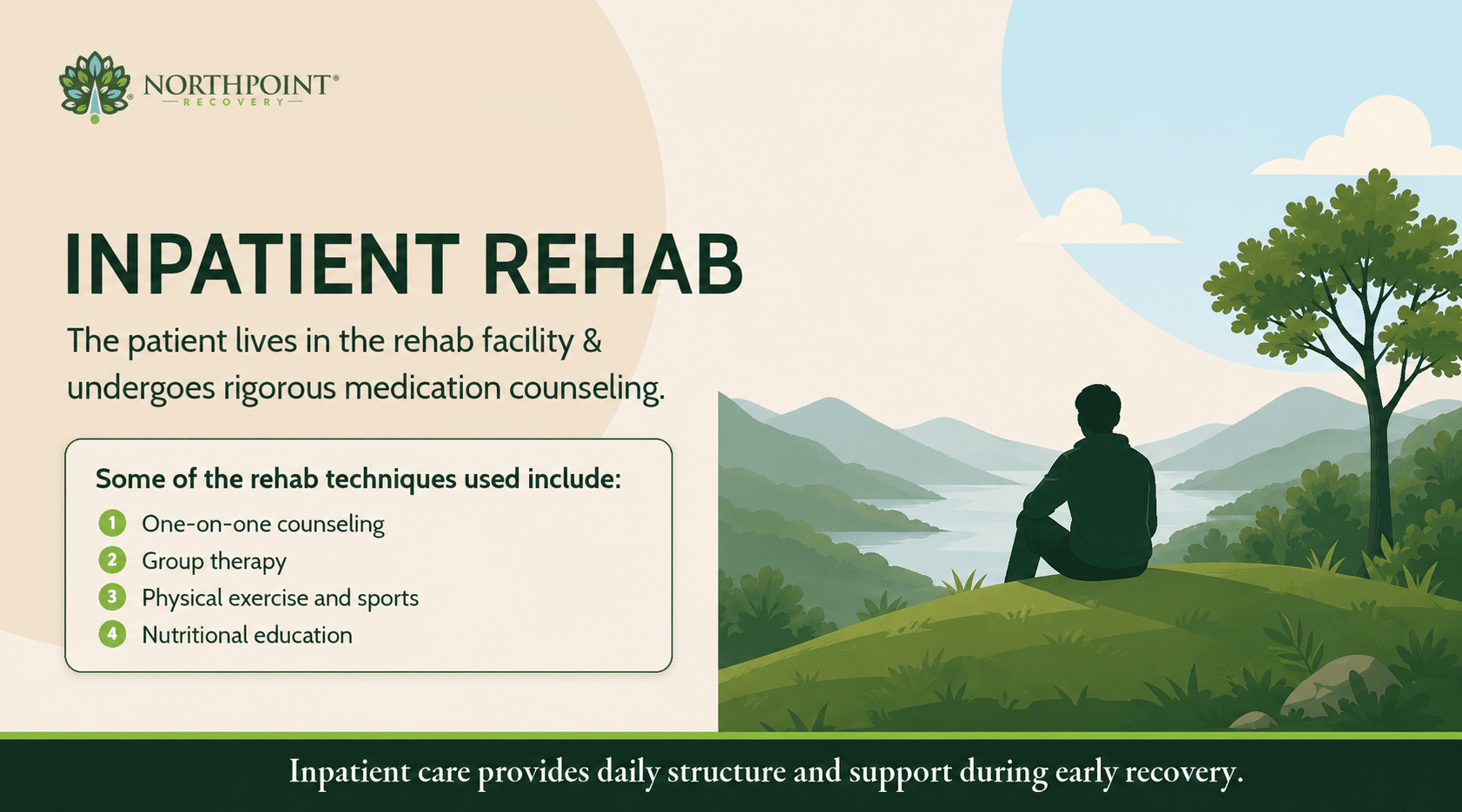
Types of Inpatient Programs
There are a few different kinds of inpatient programs, depending on what you need most for your recovery:
Traditional Inpatient Rehab:
This type of program focuses on stabilizing you physically and emotionally while providing strong, daily support for early sobriety. Stays typically last anywhere from a few weeks to a few months, depending on your needs.
Residential Treatment Programs:
Residential programs offer a longer-term approach, with stays that can last several months. They combine addiction treatment with life skills training, emotional support, and community living to help you transition back into everyday life at a steady pace.
Dual Diagnosis Inpatient Rehab:
Dual diagnosis programs are designed for people who are dealing with both addiction and mental health conditions at the same time. These programs provide integrated treatment, meaning you get help for both issues together, not separately—which often leads to stronger, more lasting recovery.
Is Inpatient Rehab Right for You?
Inpatient rehab is generally the better fit when the level of support needed goes beyond what daily life can accommodate. It’s recommended for people who:
- Have a moderate to severe addiction or a long history of substance use
- Are also managing a mental health condition like depression, anxiety, or PTSD
- Don’t have a stable or sober home environment to return to each day
- Have tried outpatient treatment before without lasting success
- Need medical supervision during detox or early recovery
- Want to fully step away from daily stressors and focus entirely on healing
The structured, immersive nature of inpatient care makes it especially effective in early recovery, when the risk of relapse is highest and the support needs are greatest.
What is Outpatient Rehab?
Outpatient rehab allows you to live at home while attending treatment sessions during the day or evening. It’s more flexible than inpatient rehab, which makes it a good fit for people who have strong support systems at home or who need to keep working, going to school, or caring for family during treatment.
Outpatient care can still be very structured, depending on the program. Some people start with a more intensive schedule, then step down to fewer hours of treatment as they make progress.
How Does Outpatient Rehab Work?
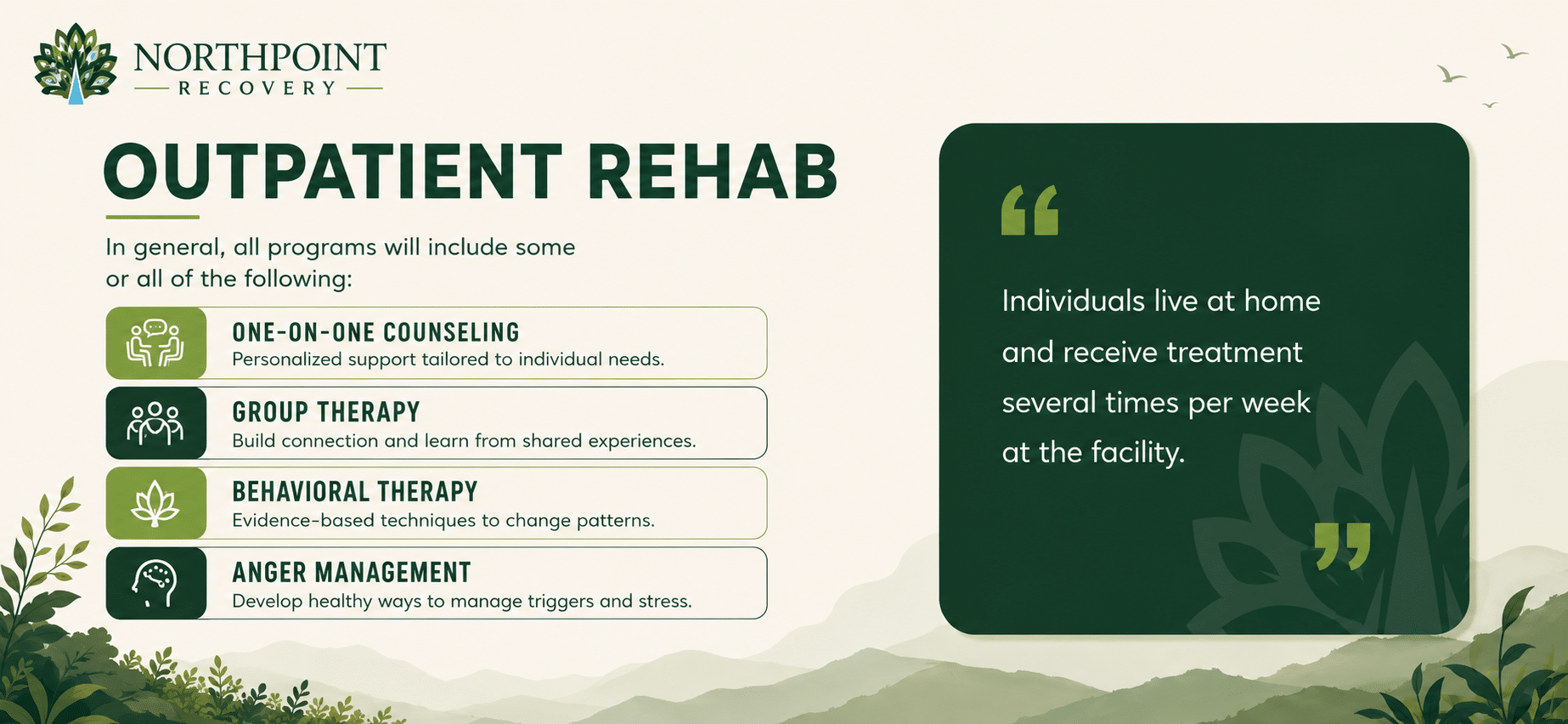
Outpatient rehab works by providing structured addiction treatment on a scheduled basis while you continue living at home. Rather than residing at a facility, you attend therapy sessions — individually and in groups — several times a week, then return to your normal environment between appointments. This allows you to maintain work, school, or family responsibilities while still receiving professional support.
Outpatient programs are typically defined by:
Scheduled therapy sessions several times a week
Opportunities to practice recovery skills in real-world settings
Flexibility to balance treatment with work, school, or family needs
A strong emphasis on relapse prevention and long-term support
The level of intensity varies depending on where you are in recovery. Most people start at a higher level of care — either a Partial Hospitalization Program (PHP) or Intensive Outpatient Program (IOP) — and gradually step down to standard outpatient as they build stability. Sessions typically focus on identifying triggers, developing coping strategies, and preventing relapse through evidence-based therapies like cognitive behavioral therapy (CBT) and motivational interviewing.
Because you’re living in the real world throughout treatment, outpatient rehab also gives you the opportunity to immediately practice the skills you’re learning — which can strengthen long-term recovery when you have a stable, supportive home environment.
Types of Outpatient Programs
Not all outpatient programs are the same. The level of support can vary depending on what you need at different stages of recovery. Here are the main types:
Partial Hospitalization Program (PHP):
PHP is the most intensive level of outpatient care. You attend treatment for most of the day, several days a week, but still return home at night. It’s often a step down from inpatient rehab or a starting point if you need high-level support without full residential care.
Intensive Outpatient Program (IOP):
IOP offers a strong level of support but with more flexibility than PHP. You typically attend therapy sessions three to five days a week, often in the mornings or evenings, so you can still work, attend school, or handle other responsibilities.
Standard Outpatient Program (OP):
OP involves fewer hours of therapy per week and is usually best for people who have already completed a higher level of care. It focuses more on ongoing support, relapse prevention, and adjusting to life in long-term recovery.
Virtual Outpatient Program:
Virtual outpatient offers the same structured programming as in-person outpatient care — individual therapy, group sessions, and relapse prevention — delivered entirely online through a secure video platform. It’s available at the PHP, IOP, and standard outpatient levels, making it a flexible option for people who live far from a treatment center, have transportation barriers, or simply do better in a home environment. At Northpoint Recovery, virtual outpatient is available in every state.
Hybrid Outpatient Program:
Hybrid outpatient combines in-person and virtual sessions, giving you the consistency of face-to-face care alongside the flexibility of attending some appointments remotely. It’s a good fit for people who want the structure and connection of being on-site part of the time but need the option to participate from home when life gets in the way. Hybrid formats are increasingly common and can make it easier to stay engaged in treatment over the long term.
Is Outpatient Rehab Right for You?
Outpatient rehab is a strong option when you have the stability and support to manage recovery while staying connected to your everyday life. It tends to be the right fit for people who:
- Have a mild to moderate addiction or are earlier in their substance use
- Have a stable, sober living situation and a reliable support network
- Need to maintain work, school, or caregiving responsibilities during treatment
- Have already completed inpatient rehab and are ready for the next step
- Are looking for ongoing support during a high-stress period or after a relapse
- Are motivated to practice recovery skills in real-world settings
Outpatient care can be just as effective as inpatient treatment — the key is being honest about the level of support you actually need to stay on track.
Key Differences Between Inpatient and Outpatient Rehab
Factor |
Inpatient Rehab |
Outpatient Rehab |
|---|---|---|
| Where you live | On-site at the treatment facility | At home or in a sober living environment |
| Level of supervision | 24/7 medical and clinical support | Support during scheduled sessions only |
| Daily structure | Fully scheduled days with therapy, groups, and activities | Flexible — sessions scheduled around your life |
| Typical duration | 30–90 days (residential programs may be longer) | A few weeks to several months depending on level of care |
| Cost | Higher — includes housing, meals, and round-the-clock care | Lower — no residential costs |
| Who it’s best for | Severe addiction, co-occurring disorders, unstable home environment | Mild to moderate addiction, strong support system, work or family obligations |
| Real-world practice | Limited — focus is on healing away from daily triggers | High — you practice recovery skills in everyday settings |
| Medical detox available | Yes | Yes, at Northpoint Recovery |
| Insurance coverage | Typically covered, varies by plan | Typically covered, varies by plan |
Both types of treatment can be effective. It really comes down to what fits your needs, lifestyle, and recovery goals. Here are the main differences to keep in mind:
Level of supervision: Inpatient provides 24-hour support; outpatient relies more on your ability to manage triggers outside of sessions.
Daily structure: Inpatient is fully scheduled and highly structured; outpatient gives you more free time and flexibility.
Length of program: Inpatient programs typically last 30 to 90 days, while outpatient programs can range from a few weeks to several months depending on the level of care.
Cost: Outpatient rehab is generally less expensive since you’re not paying for housing or round-the-clock care.
Lifestyle needs: Outpatient allows you to keep up with work, school, or family obligations; inpatient gives you time away from outside stress to fully focus on recovery.
Recovery environment: Inpatient removes you from daily triggers and distractions; outpatient helps you practice new skills while still navigating real-life situations.
How to Choose the Right Program for You
The best program is the one that gives you the support you actually need, not just the one that sounds easiest or most convenient. In fact, instead of choosing one or the other, many people choose to complete an outpatient rehab program as a “next step” after completing inpatient treatment. It helps ease the transition back into daily life by providing a structured environment for ongoing support, while allowing for more freedoms and real-world practice than inpatient care.
However, this isn’t always the case. Some people may choose outpatient treatment later in recovery — for example, after a relapse or during a high-stress period — when they need extra support but don’t require the intensity of inpatient care.
To decide which is right for you, ask yourself a few key questions:
Do I need a safe, structured place away from triggers to focus on recovery?
Can I stay sober while living at home and managing daily responsibilities?
How much support do I have from family, friends, or a sober community?
Have I tried outpatient treatment before without success?
Am I dealing with any mental health issues that need close monitoring?
If you’re not sure, talking to a professional can help. They’ll assess your situation and recommend the level of care that gives you the best chance to succeed—not just in getting sober, but in staying sober long-term.
Inpatient vs. Outpatient Rehab FAQs
What happens if you relapse while in outpatient rehab?
Relapse is a common part of the recovery journey — not a failure. If it happens, your treatment plan can be adjusted. That might mean increasing the intensity of your outpatient schedule or stepping up to inpatient care for more structured support.
Is detox included in inpatient or outpatient rehab?
It depends on the treatment center. At Northpoint Recovery, we offer medical detox as part of both inpatient and outpatient treatment programs, so you don’t have to go through withdrawal alone before starting rehab.
Can I go to outpatient rehab if I have a full-time job or kids?
Yes. Many outpatient programs offer flexible scheduling, including evening and weekend sessions, so you can attend treatment while keeping up with work, childcare, or other responsibilities.
Which is more effective — inpatient or outpatient rehab?
Neither is universally better. Research shows both can lead to lasting recovery when matched to the right person and situation. Inpatient tends to produce stronger short-term outcomes for severe addictions, while outpatient is highly effective for people with stable home environments and strong support systems. The most important factor is finding the level of care that fits your specific needs.
How long does inpatient rehab typically last?
Most inpatient programs run 30 to 90 days, though some residential treatment programs can last several months. The right length depends on the severity of your addiction, any co-occurring mental health conditions, and how you’re progressing in treatment.
Does insurance cover inpatient rehab?
Most major insurance plans, including Medicaid and Medicare, cover some level of inpatient addiction treatment under federal mental health parity laws. Coverage varies by plan, so it’s worth verifying your benefits before starting. Northpoint Recovery can help you check your coverage quickly — just use our insurance verification tool.
What’s the difference between IOP and PHP?
Both are outpatient levels of care, but they differ in intensity. A Partial Hospitalization Program (PHP) involves treatment for most of the day, several days a week — it’s the most intensive outpatient option. An Intensive Outpatient Program (IOP) typically meets three to five times a week in morning or evening blocks, offering strong support with more flexibility for work or family obligations.
Can I switch from outpatient to inpatient if I’m not making progress?
Yes, and it’s more common than people think. Treatment is not a straight line, and stepping up to a higher level of care isn’t a setback — it’s a sign that you and your treatment team are paying attention and adjusting to what you actually need.
Is inpatient rehab better for alcohol addiction?
For moderate to severe alcohol addiction, inpatient rehab is often recommended — especially if medical detox is needed. Alcohol withdrawal can be dangerous, and 24/7 supervision during the early stages of detox significantly reduces health risks. After stabilization, some people transition to outpatient care to continue their recovery.
Find the Right Fit for Your Recovery Journey
Whether you’re considering inpatient or outpatient care, the most important thing is finding a program that meets you where you are—and gives you the support you need to move forward. Recovery isn’t one-size-fits-all, and the right treatment plan can make all the difference.
At Northpoint Recovery, we offer both inpatient and outpatient programs tailored to your unique needs. Our team is here to help you understand your options and choose the path that’s right for you.
Contact us today to learn more and take the next step toward a healthier, more stable future.