

Those who know someone who’s struggled with substance abuse (or struggled themselves) know that addiction is not a choice. It’s not just a lack of willpower or poor decision-making — it’s a chronic condition that affects the brain in ways that make quitting incredibly difficult.
Understanding how addiction changes the brain allows you to shift your perspective on the issue. For those struggling, knowing that addiction isn’t a moral failure but a medical condition can help relieve some of the guilt and shame they may feel. This provides them the emotional space to start the recovery process with a clearer mind, focusing on what they can do to heal rather than blaming themselves.
For those whose loved one is struggling with addiction, understanding what happens to the brain during addiction can provide a sense of hope. The brain has an incredible ability to heal, meaning recovery is possible with the right treatment, tools, and support.
Key Takeaways:
- Addiction is a chronic brain condition, not a lack of willpower. It changes how the brain handles pleasure, stress, memory, and decision-making.
- Drugs hijack the brain’s reward system, flooding it with dopamine until everyday joys stop feeling rewarding and the substance is needed just to feel normal.
- Over time, the brain’s stress and impulse-control systems weaken too, which is what makes cravings feel so hard to resist.
- These changes are what drive the cycle of trigger, craving, use, and guilt, not weakness or bad character.
- The brain can heal. With therapy, support, healthy habits, and time, it can rebuild healthier pathways and recovery becomes possible.
What the Research Says About Addiction and the Brain
The scientific consensus is clear: addiction is a chronic, treatable brain condition, not a moral failing or a lack of willpower. Here’s what decades of neuroscience tell us.
- The brain can heal. Thanks to neuroplasticity, the same adaptability that lets addiction take hold is what makes recovery possible with the right treatment, support, and time.
- It’s a brain condition, not a choice. The National Institute on Drug Abuse reports that substances change the brain’s structure and function in lasting ways, which is why quitting takes far more than willpower.
- It affects several systems at once. Addiction reshapes the networks that handle reward, stress, memory, and decision-making, not just one part of the brain.
- It follows a three-stage cycle. Leading NIH researchers describe addiction as a recurring cycle of intoxication, withdrawal, and craving, with each stage tied to a specific brain system. That mapping is what makes the cycle so self-reinforcing.
- This has reshaped treatment. Viewing addiction as a medical condition rather than a personal weakness has moved the field away from shame and toward evidence-based care.
How Addiction Works In the Brain
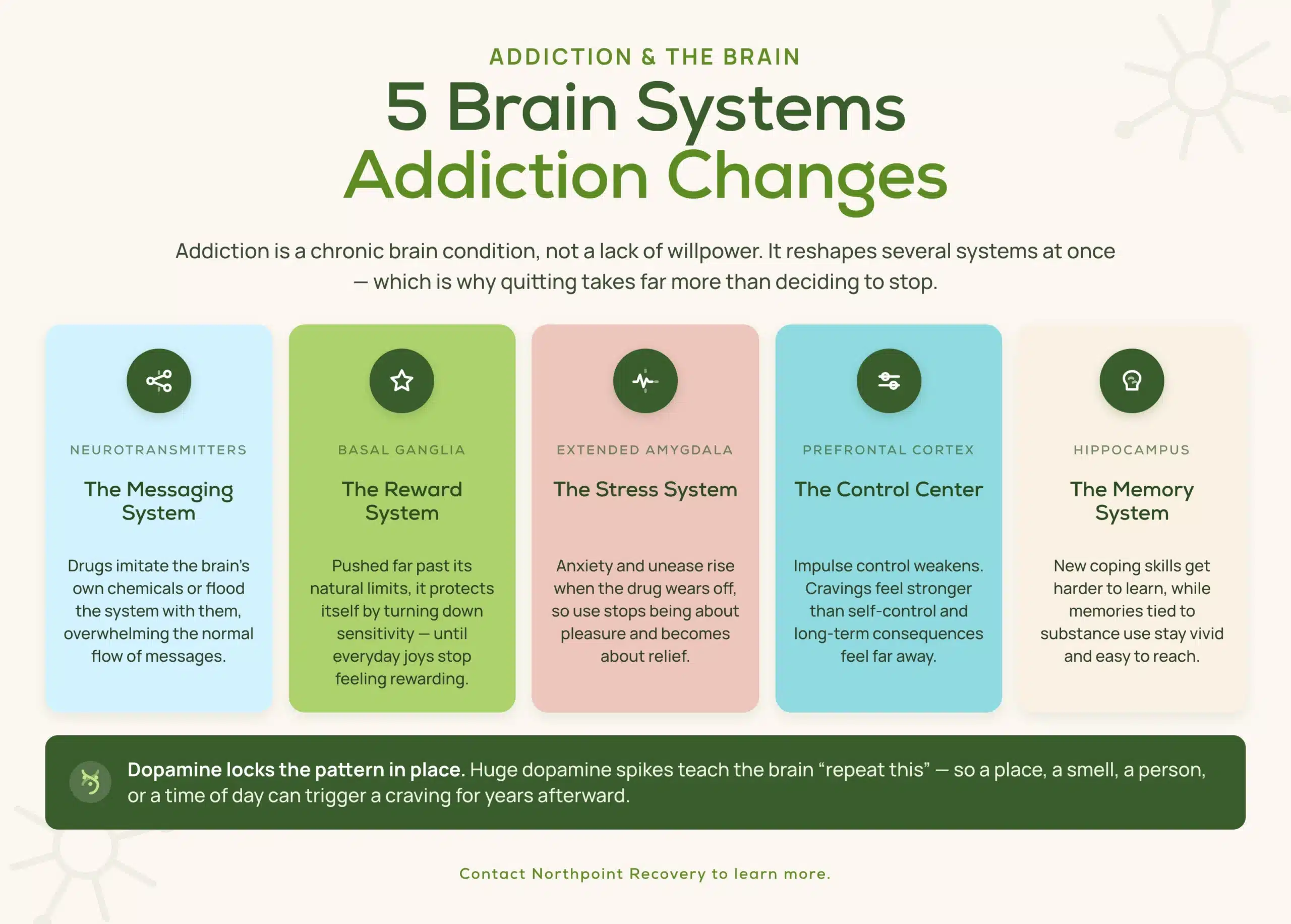
Addiction begins long before someone realizes their brain has changed. It starts quietly, deep inside the system that helps you feel pleasure, stay safe, and make decisions. To understand addiction, it helps to picture the brain as a busy city where messages are always moving. Drugs don’t just enter this city; they rewrite the traffic rules, and over time, they change how the city works altogether.
Where Everything Starts: The Brain’s Messaging System
In this “city,” brain cells talk to each other using small chemicals called neurotransmitters. These chemicals help you feel joy when you hear music, comfort when someone hugs you, or focus when you solve a problem.
According to the National Institute on Drug Abuse, when drugs enter the brain, they disrupt this delicate system:
- Some drugs pretend to be natural brain chemicals and trick brain cells into activating in unusual ways.
- Others flood the system with huge amounts of the brain’s own chemicals, overwhelming the normal flow of messages.
At first, these changes might feel good or exciting. But inside the brain, the shift has already begun.
The Reward System: When Pleasure Gets Rewired
Next, the drug moves toward the brain’s “reward center,” called the basal ganglia. This is where the brain stores memories of things that feel good: laughing with friends, eating your favorite food, or finishing a difficult task.
Drugs push this reward system way beyond its natural limits. Imagine a speaker turned up too loud. The sound is powerful, but it’s also harmful.
- The drug creates a surge of pleasure much stronger than anything from everyday life.
- The reward system tries to protect itself by becoming less sensitive.
- Slowly, normal joys stop feeling rewarding.
This is when the person starts wondering why nothing feels fun anymore. The brain has adjusted to the drug, and the balance has shifted.
The Stress System: When Relief Becomes the Goal
After the high fades, another part of the brain steps in: the extended amygdala, which handles stress and anxiety.
At first, this system reacts to the drug wearing off with mild discomfort. But as use continues:
- Stress and anxiety start to increase.
- The person feels uneasy or irritable without the drug.
- The brain learns that the drug brings relief, at least for a moment.
The goal quietly changes. It’s no longer about feeling good. It’s about stopping the discomfort that comes when the drug leaves the body.
The Control Center: When Impulses Take Over
The last major piece is the prefrontal cortex, the area that helps you think ahead, make choices, and control impulses.
This part of the brain is still developing in teens, which makes them especially vulnerable. When drugs weaken this area:
- Decisions are harder to think through.
- Cravings feel stronger than self-control.
- Long-term consequences feel far away.
Now several systems, pleasure, stress, and decision-making, are all pulling in the same direction: toward the drug.
The Memory System: When the Brain Learns to Crave
The hippocampus, the area that forms new memories, is caught up in this too. As addiction takes hold, it becomes less efficient, which makes learning healthy new routines and coping skills harder at exactly the moment a person needs them most. Meanwhile, the memories tied to substance use stay vivid and easy to reach, which is part of why old patterns can feel so much stronger than new ones.
How Dopamine Locks the Pattern in Place
Running through all of this is dopamine, the brain chemical that helps form habits. Dopamine tells the brain, “Remember this, it’s important.”
Drugs create such huge spikes of dopamine that the brain learns: “This is something we repeat.”
Anything connected to the drug, an old hangout spot, a smell, a person, even a certain time of day, can trigger a sudden, strong craving. These cues stay wired into the brain for years because the memory is so powerful.
Why Addiction Becomes So Hard to Break
As the brain adapts, it tries to protect itself from the constant overload. It turns down its own pleasure system, making fewer neurotransmitters and fewer of the receptors a substance activates. This is where tolerance comes from: with fewer receptors left to reach, the amount that once felt intense no longer does, so a person needs more to feel the same effect.
That adaptation leads to a painful shift:
- Everyday activities feel dull or empty.
- The drug is needed just to feel normal.
- Higher doses are needed to feel the same effects.
- Stress becomes harder to manage.
- Decisions become harder to control.
The person isn’t chasing a high anymore. They’re trying to feel okay.
The Cycle of Dopamine and Addiction: Craving and Relapse
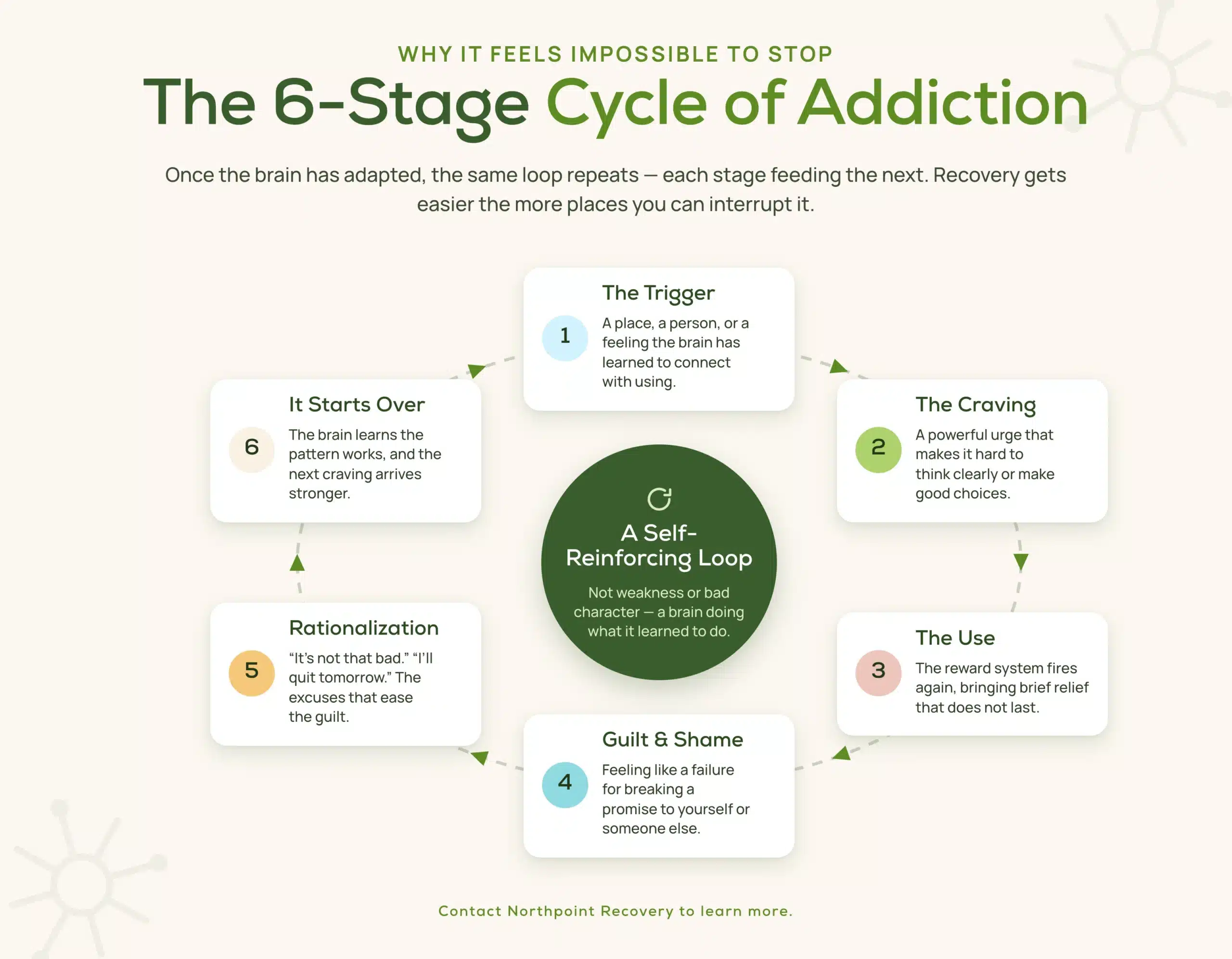
Once you understand how addiction changes the brain, the cycle of addiction becomes easier to understand, too. Let’s put the pieces together to provide a full picture of how the cycle works. The more you can interrupt the cycle at each step, the easier it will be to stay on the path to recovery.
1. The Trigger
The cycle usually starts with a trigger. This is something that reminds the person of their addiction. It could be a place, a person, or even a feeling. For example, if someone used to drink when they felt stressed, the feeling of stress could trigger a craving for alcohol.
The brain has learned to connect certain situations with using the substance, and when those situations happen again, the brain “says” it’s time for the substance.
2. The Craving
Once the trigger happens, the next step is the craving. A craving is a strong desire or urge to use the substance again. It’s not just a thought, but something that can feel really powerful and hard to control. The brain has become used to the rush of feeling good when using, and the craving is the brain’s way of pushing you toward that high. The craving can feel overwhelming and make it hard to think clearly or make good choices.
3. The Use
When the craving becomes too strong, a person might decide to use again. This is where they give in to the urge and use the substance they’ve been trying to avoid. At this point, the brain’s reward system is activated again. The person might feel a temporary sense of relief or pleasure, which feels good in the moment. However, this doesn’t last long, and it often makes things worse in the long run.
4. The Guilt and Shame
After using, many people experience guilt or shame. They feel bad about breaking their promise to themselves or others. They might feel like they’ve failed, which can lead to feelings of disappointment or self-loathing. This guilt can be tough because it can make someone feel like they’ll never get better or that they can’t control their addiction.
5. The Rationalization
To cope with these feelings, the person might start to make excuses or rationalize their behavior. They might think things like, “It’s not that bad,” or “I’ll quit tomorrow.” This rationalization helps them justify the decision to use, even if deep down they know it wasn’t a good choice. It’s like the brain is trying to make the person feel better about what happened, even if it means ignoring the long-term consequences.
6. The Cycle Starts Over
After rationalizing the use, the cycle starts all over again. The brain learns that using substances helps relieve uncomfortable feelings, even temporarily, so the cravings can come back stronger the next time. The more this happens, the more the brain gets used to this cycle, making it harder to break free.
How to Heal the Brain After Addiction
Healing the brain from addiction involves multiple approaches to help restore balance and regain control over thoughts and behaviors. Here’s a more detailed breakdown of how to heal:
1. Therapy (Cognitive-Behavioral Therapy – CBT)
CBT helps recovery by changing negative thought patterns and behaviors. It teaches people how to recognize triggers (situations, feelings, or thoughts that lead to cravings) and replace unhealthy responses with healthier coping mechanisms.
Over time, CBT helps the brain form new neural connections, allowing for healthier ways of thinking and reacting. It also helps reduce cravings’ intensity by shifting how the brain processes triggers.
2. Medication-Assisted Treatment (MAT)
Certain medications can help manage cravings and withdrawal symptoms by balancing brain chemicals like dopamine, serotonin, and glutamate. These medications can make it easier to focus on therapy and recovery without the overwhelming urge to use.
For opioid addiction, drugs like methadone or buprenorphine reduce cravings and withdrawal symptoms. For alcohol addiction, medications like disulfiram or acamprosate can help maintain sobriety by making alcohol less appealing or reducing its pleasurable effects.
3. Support Systems
Having a support system post-treatment, whether it’s family, friends, or a counselor, offers empathy, encouragement, and understanding. Consistent participation in support groups provides accountability, motivation, and encouragement, which can prevent relapse and reinforce healthy coping strategies. Support groups like Narcotics Anonymous (NA) or Alcoholics Anonymous (AA) create a community of people who understand addiction and recovery.
Talking with others who have gone through the same struggles helps break the isolation that often comes with addiction. This connection can reduce feelings of loneliness and remind the person that they are not alone in their struggle.
4. Mindfulness and Stress-Reduction Techniques
Mindfulness practices, such as meditation or yoga, can help rewire the brain by training it to be more present and less reactive to stress and cravings. When someone practices mindfulness, they’re learning to focus on the current moment without judgment. Over time, this can strengthen areas of the brain responsible for self-regulation, emotional control, and decision-making.
One of the main ways mindfulness helps the brain recover from addiction is by increasing activity in the prefrontal cortex. This is the area of the brain involved in higher-level thinking like planning, impulse control, and making decisions.
This part of the brain helps override the more automatic, impulsive reactions that come from the limbic system (which plays a key role in cravings and emotional responses). Mindfulness can also decrease activity in the amygdala, which is involved in stress and fear responses, helping to reduce emotional reactivity and making it easier to stay calm in difficult situations.
5. Lifestyle Changes and Healthy Habits
Exercise, proper sleep, and healthy eating are essential for brain healing. Exercise boosts the production of endorphins, which can help replace the “high” once provided by substances. A balanced diet and good sleep help regulate brain chemicals and improve overall mental health. When practiced long-term these habits can help the brain return to a more balanced, natural state. This reduces dependency on substances for mood regulation and helps prevent relapse.
6. Time and Patience
Addiction causes significant changes to the brain’s structure and function, and these changes take time to reverse. It’s not something that can be fixed quickly, but with consistent effort, the brain can slowly heal and start to rewire itself.
Time also allows for the development of new habits and coping mechanisms. As someone works through their recovery, they can begin to build healthier routines and ways of thinking that become more automatic. It’s through these small, everyday efforts that long-term change happens.
How Long Does It Take the Brain to Heal After Addiction?
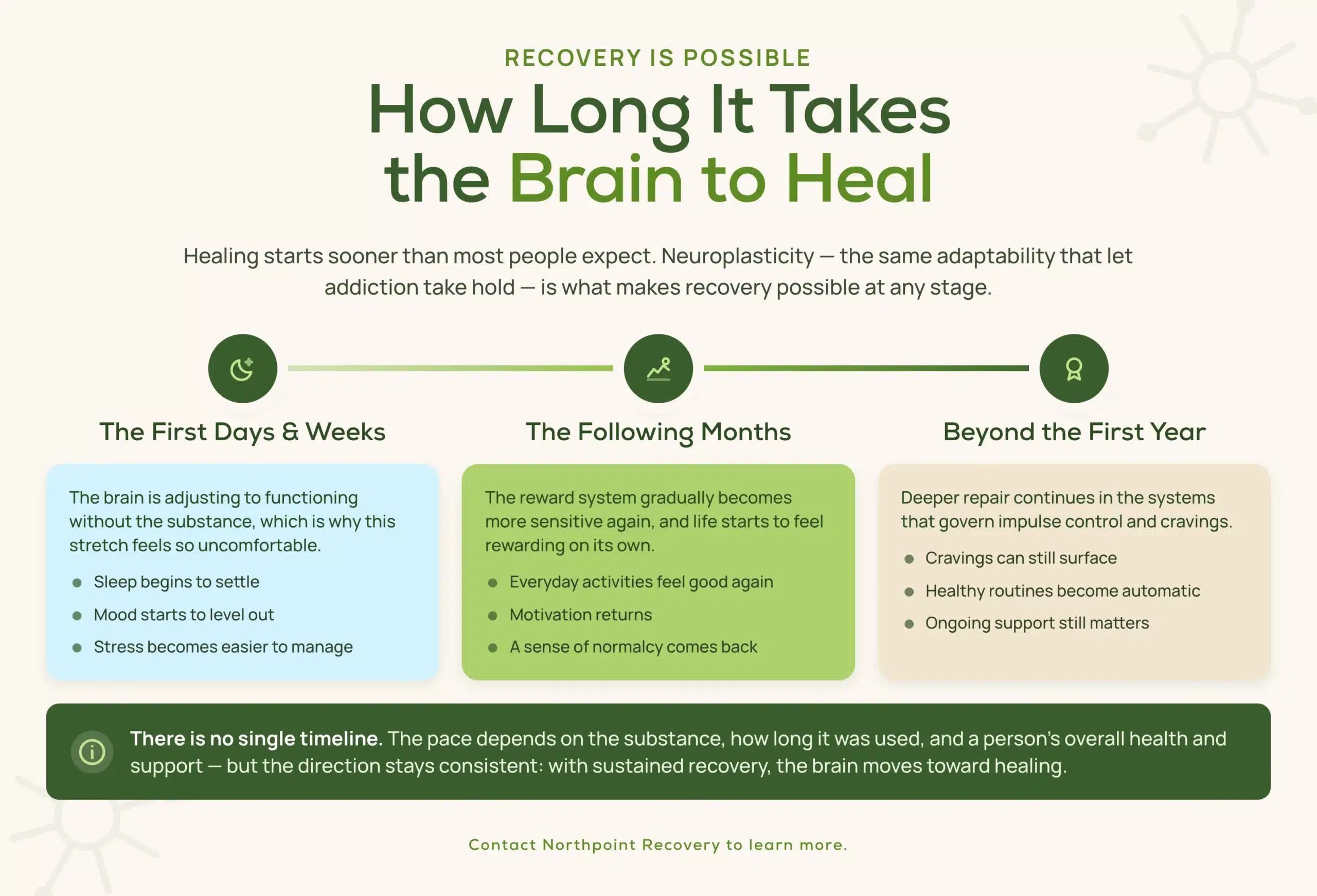
There is no single timeline for brain recovery, but the encouraging news is that healing starts sooner than most people expect. Some changes ease within the first weeks of sobriety, while deeper ones take months or longer. The brain’s capacity to rebuild, known as neuroplasticity, is what makes recovery possible at any stage.
In the earliest days and weeks, the brain is adjusting to functioning without the substance, which is why this stretch can feel so uncomfortable. Sleep, mood, and stress levels are often the first things to start settling.
Over the following months, the reward system gradually becomes more sensitive again, and everyday activities slowly start to feel rewarding on their own. This is often when motivation and a sense of normalcy begin to return.
Deeper repair, especially in the systems that govern impulse control and cravings, can continue well beyond the first year. This is why cravings can still surface after long periods of sobriety, and why ongoing support matters long after treatment ends. Recovery is less a finish line than a process of the brain slowly rewiring itself toward health.
The pace depends on the substance, how long it was used, and a person’s overall health and support. What stays consistent across the research is the direction: with sustained recovery, the brain moves toward healing, not away from it.
Start Healing From Addiction
Healing the brain from addiction is a multifaceted process that requires therapy, medication, support, lifestyle changes, and time. At Northpoint Recovery, our addiction treatment programs will help you do just that.
We’ll work with you to create a custom treatment plan based on your unique needs and experiences. Alumni of our program also have access to relapse prevention resources and a support network to help them stick to their recovery.
Contact us today to learn how our treatment programs can change your or your loved one’s life for the better.