


When someone begins looking for support with addiction recovery, two names often come up right away: Alcoholics Anonymous (AA) and Narcotics Anonymous (NA). Both programs have helped millions of people around the world build sober lives through peer support, shared experience, and structured recovery steps.
At first glance, AA and NA can seem almost identical. Both use the 12-step model, both hold regular group meetings, and both emphasize honesty, accountability, and community support. Because of these similarities, many people assume the two programs are interchangeable.
In reality, there are some important differences between them. The groups focus on slightly different substances, use different language in meetings, and may attract people with different recovery experiences. These distinctions can shape how comfortable someone feels participating in the program.
Learning how AA and NA work can make it easier to decide which meetings may be the best fit. Many people also find it helpful to try both and see where they feel the strongest sense of connection and support.
What Is Alcoholics Anonymous (AA)?
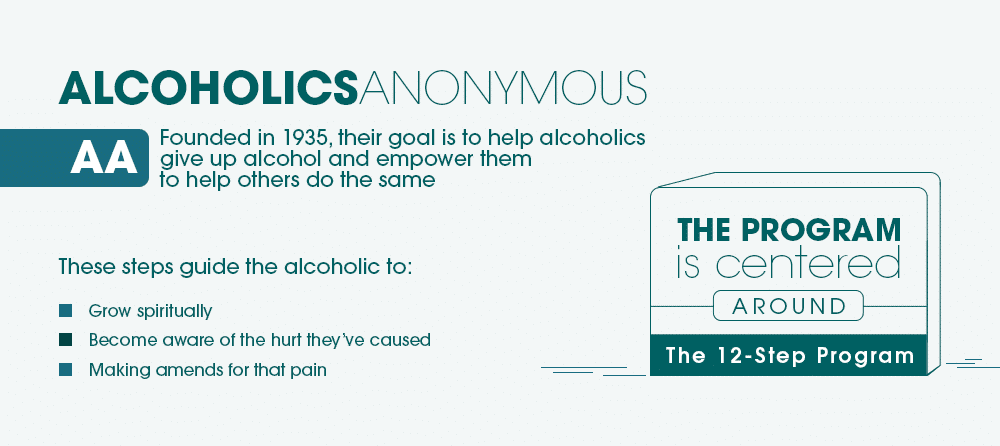
Alcoholics Anonymous is one of the most widely known recovery programs in the world. It was created to help people who want to stop drinking and build a stable, sober life with the support of others who understand what they are going through.
AA meetings provide a space where people can share their experiences with alcohol addiction, listen to others in recovery, and learn practical ways to maintain sobriety. The program centers around the 12 steps, which encourage personal reflection, accountability, and ongoing personal growth.
How AA Meetings Work
AA meetings are typically peer-led gatherings where people share their personal experiences with alcohol addiction and recovery. Meetings may include readings from AA literature, open discussions, or individuals sharing their stories.
Members often work through the program’s 12 steps with the guidance of a sponsor, who is someone with more recovery experience who offers support and accountability.
Meetings are free to attend and are available in many communities, making AA an accessible option for people seeking ongoing support.
What Is Narcotics Anonymous (NA)?
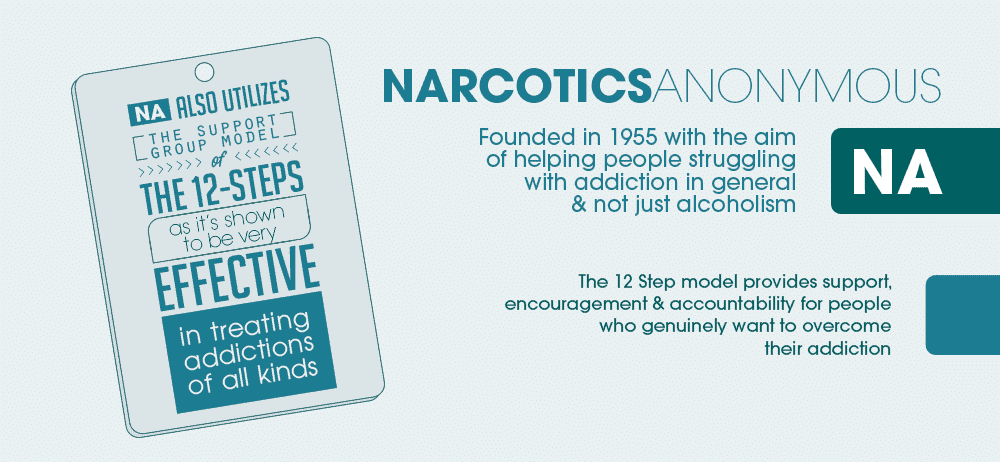
Narcotics Anonymous is a recovery support program designed for people struggling with drug addiction. Like AA, it is built around peer support and the 12-step recovery model. NA meetings give people a place to talk openly about addiction, listen to others who have had similar experiences, and learn practical ways to stay sober.
While AA focuses specifically on alcohol, NA takes a broader approach to addiction. Meetings typically refer to “addiction” rather than naming a specific substance, which allows people recovering from many different types of drug use to participate.
Many people attend NA after completing treatment, while others begin attending meetings as part of their first attempt to stop using drugs. The goal is to create a supportive community where people can share experiences and build healthier routines in recovery.
How NA Meetings Work
NA meetings are peer-led and typically follow a structure similar to AA meetings. Members gather to share their experiences with addiction, listen to others in recovery, and support each other in maintaining sobriety.
Meetings may include readings from NA literature, open discussions, or personal stories about recovery. Many members also work through the 12 steps with the help of a sponsor who provides guidance and accountability.
Like AA, NA meetings are free to attend and open to anyone who wants to stop using drugs. Some people who attend NA have previously participated in AA, while others prefer NA because its language reflects a broader addiction experience. The program is open to anyone who has a desire to stop using drugs.
Similarities Between AA and NA
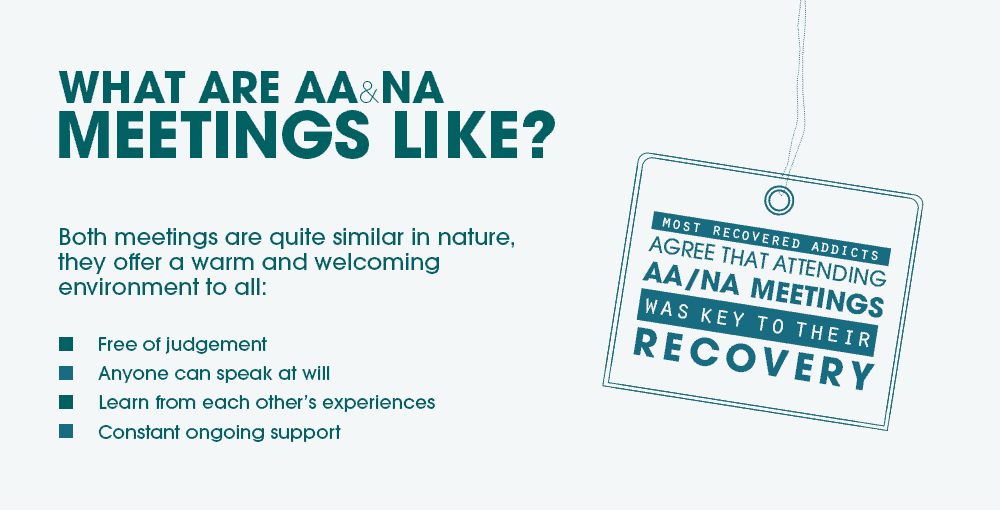
Alcoholics Anonymous and Narcotics Anonymous share many of the same core principles. Both programs were built on the idea that people recovering from addiction can support each other through shared experience, honesty, and accountability.
Because NA was originally modeled after AA, the overall structure of the programs is very similar. Many people who attend one program will recognize the format, language, and recovery concepts used in the other.
Some of the key similarities between AA and NA include:
- Both use the 12-step recovery model
- Both rely on peer-led meetings rather than professional therapy
- Both encourage working with a sponsor for guidance and support
- Both emphasize honesty, personal responsibility, and long-term growth
- Both offer free meetings that are widely available in many communities
- Both provide ongoing support before, during, and after formal treatment
For many people, the biggest benefit of both programs is the sense of community. Hearing others share similar struggles can reduce feelings of isolation and remind people that recovery is possible.
Key Differences Between AA and NA
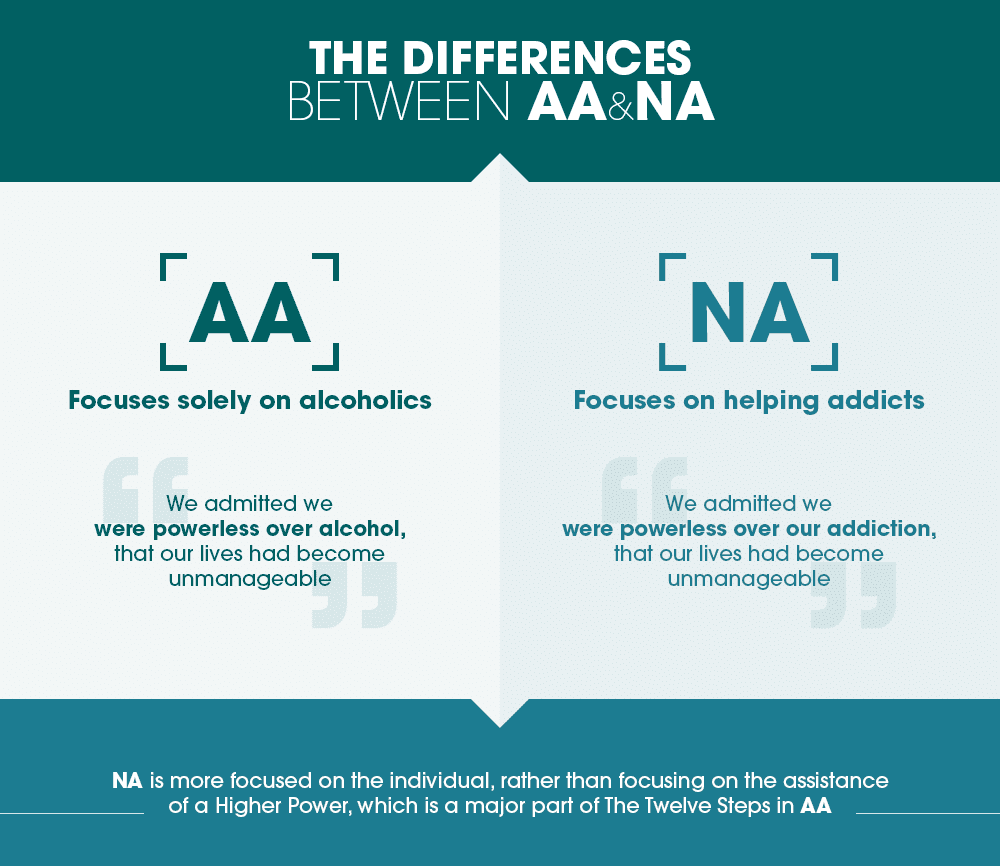
Although AA and NA share many similarities, there are a few important differences that can shape the experience of each program. These differences mostly relate to the focus of the meetings, the language used when discussing addiction, and the type of experiences members may share.
Understanding these distinctions can help people decide which program may feel like the best fit for their recovery journey.
Focus on Alcohol vs. Addiction
One of the main differences between the programs is the way they frame substance use.
AA focuses specifically on alcohol addiction. Conversations in meetings often center around drinking and the impact alcohol has had on members’ lives.
NA takes a broader approach by focusing on addiction in general rather than a specific substance. This allows people recovering from many different types of drug use to participate and share their experiences.
Language Used in Meetings
The language used in meetings also differs slightly between the two programs.
AA typically uses alcohol-specific terms. Members often refer to themselves as alcoholics and speak about their relationship with drinking.
NA meetings usually use broader language such as “addiction” or “substance use.” This allows people recovering from different drugs to relate to each other’s experiences more easily.
Literature and Program Materials
Each program also has its own recovery literature that members may read or discuss during meetings.
AA is well known for its foundational text often referred to as the Big Book, which outlines the 12-step recovery approach and shares personal recovery stories.
NA has its own set of materials, including the Basic Text, which explains the program’s principles and includes stories from people recovering from drug addiction.
Both sets of literature are meant to help members better understand addiction and support their recovery journey.
How to Choose Between AA and NA
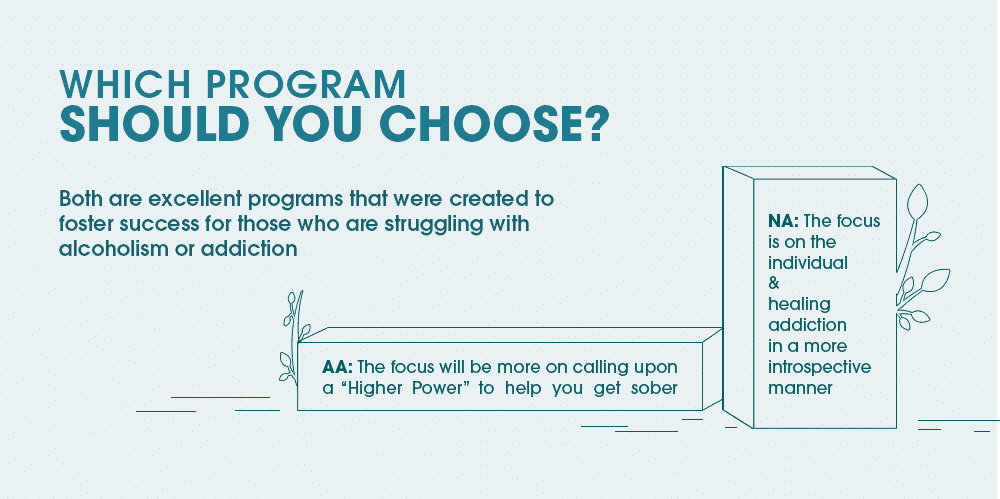
Choosing between AA and NA often comes down to personal comfort and connection. While both programs follow a similar structure, the environment and conversations in each group can feel slightly different depending on the people attending and the focus of the meeting.
Some people feel more comfortable in AA because the discussions center specifically on alcohol. Others prefer NA because the conversations focus more broadly on addiction and may include experiences with multiple substances.
A few factors that may help guide your decision include:
- The substance that has been most difficult to stop using
- Whether you relate more to alcohol-focused or addiction-focused discussions
- The meeting culture and atmosphere in your area
- How comfortable you feel sharing in the group
- The availability of meetings near you
It is also common for people to attend several different meetings before deciding what feels right. Every group has its own dynamic, and the sense of connection you feel with other members can play a big role in your recovery experience.
Can You Attend Both AA and NA?
Yes, many people attend both AA and NA meetings during their recovery. The programs are not mutually exclusive, and there is no rule that someone must choose only one.
Some people find that attending both groups provides a wider support network. They may relate to certain discussions in AA while also finding value in the broader addiction focus of NA.
Others attend meetings from both programs simply because they offer more opportunities to connect with people in recovery. Having more meetings available can make it easier to stay consistent with support, especially during challenging periods.
Recovery looks different for everyone. For some people, AA becomes their primary support system. Others feel more connected to NA. And many find that a combination of meetings helps them build the strongest foundation for long-term sobriety.
Are AA and NA the Only Recovery Support Options?
AA and NA are two of the most well-known recovery support groups, but they are not the only options available. Over the years, several other programs have been developed to support people who want different approaches to recovery.
Some people connect strongly with the 12-step model used in AA and NA. Others prefer programs that focus more on behavioral strategies, mindfulness, or non-spiritual approaches. Having multiple options allows people to find a support system that fits their personal beliefs, comfort level, and recovery goals.
Some alternative recovery support programs include:
- SMART Recovery, which focuses on practical coping skills and self-management
- Celebrate Recovery, a faith-based program that incorporates Christian principles
- Refuge Recovery, which uses mindfulness and Buddhist-inspired practices
- LifeRing, a peer-led group that emphasizes personal responsibility and individual recovery plans
Many people explore different groups before deciding which environment feels most supportive. What matters most is finding a community where you feel comfortable, understood, and encouraged to keep moving forward.
When Peer Support May Not Be Enough
Support groups and sober friends can play a powerful role in recovery, but some people benefit from additional help beyond meetings alone. Addiction can affect mental health, physical health, and daily functioning in ways that may require professional treatment.
For example, someone who has been drinking or using heavily for a long time may experience withdrawal symptoms when they stop. Others may struggle with anxiety, depression, trauma, or other mental health concerns that contribute to substance use.
In these situations, structured treatment programs can provide medical support, therapy, and guidance that complements peer support meetings.
Professional help may be especially important if someone is experiencing:
- Severe or long-term substance use
- Withdrawal symptoms when trying to stop
- Repeated relapse despite attending meetings
- Co-occurring mental health conditions such as anxiety or depression
- Difficulty managing work, relationships, or daily responsibilities
Many people find that combining treatment with support groups like AA or NA creates a stronger foundation for recovery. Treatment can address the underlying causes of addiction, while peer groups provide ongoing encouragement and accountability.
Find Professional Support for Addiction Recovery
AA and NA can be valuable sources of support, connection, and accountability. For some people, though, meetings alone may not address the deeper factors driving substance use.
Professional treatment can help people work through issues like trauma, mental health struggles, and unhealthy coping patterns while building a stronger foundation for recovery. At Northpoint Recovery, treatment combines evidence-based care with compassionate support to help people move toward lasting change.
If you have questions about treatment options, our team is here to help. Contact us today to learn how we can help support you on your journey to recover from alcohol addiction or drug addiction.
Find Your Treatment Center Idaho · Washington · Colorado · Nebraska
Idaho
Washington
Colorado
Choose a location to view available treatment programs. Verify Your Insurance (855) 663-0615