


Key Takeaways:
- Complacency is a false sense of security that recovery no longer needs active work.
- It often grows quietly as life stabilizes and the pain of addiction feels far away.
- Warning signs include skipped meetings, isolation, overconfidence, and dropped routines.
- It doesn’t cause relapse overnight, but it raises the risk by loosening support.
- Staying connected, honest, and engaged is what protects long-term recovery.
Recovery doesn’t end the day treatment ends or the day someone reaches a sobriety milestone. It’s an ongoing practice that takes honesty, support, and steady attention over time.
Complacency in addiction recovery can happen when a person starts to feel like they no longer need the routines, support, or structure that helped them get sober. This can create a false sense of security, where recovery starts to feel “done” instead of something that still needs care.
This doesn’t mean someone has failed or stopped caring about their recovery. It means they may need to pause, pay attention, and reconnect with the habits that help them stay grounded. In this post, we’ll look at what complacency in recovery is, why it happens, the warning signs to watch for, and how to stay engaged before relapse risk increases.
What Is Complacency in Addiction Recovery?
Complacency in addiction recovery is a false sense of security that can develop when a person starts to believe they no longer need to stay active in their recovery. It often shows up as overconfidence, reduced support, skipped routines, or the belief that relapse is no longer a real risk.
Complacency in recovery happens when progress starts to feel like proof that ongoing recovery work is no longer needed.
This is different from feeling stable, peaceful, or proud of how far you’ve come. Healthy contentment allows someone to enjoy their progress while still respecting the work that helped them get there. Complacency lowers that guard.
Someone can feel grateful for their sobriety and still keep up with meetings, therapy, self-reflection, and support. That balance matters because addiction recovery is not a one-time achievement. It’s a long-term process that often needs continued care, especially during stress, change, or major life transitions.
Complacency can happen at any stage of recovery. For some people, it starts after a few months, once life feels calmer. For others, it can develop after years of sobriety, when the pain of active addiction feels far away and old risks start to seem less serious.
That’s what makes it so important to recognize early. The goal isn’t to live in fear of relapse. The goal is to stay honest about what supports your recovery, even when life feels steady.
Why Does Complacency Happen in Recovery?
Complacency often happens because recovery starts to feel easier with time. In early sobriety, many people are highly focused on change. They may attend meetings often, follow treatment recommendations closely, talk to their sponsor or therapist regularly, and avoid anything that feels risky.
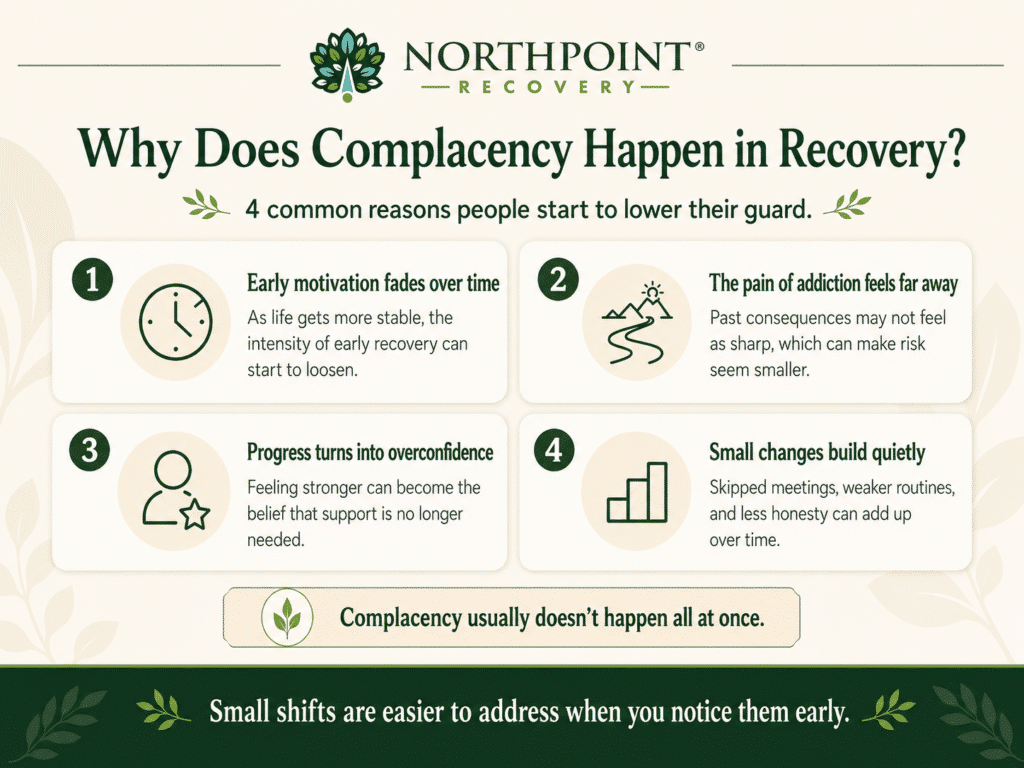
As life becomes more stable, that early intensity can fade. This can be a healthy part of growth, but it can also create room for old thinking patterns to return.
Early Motivation Can Fade Over Time
In early recovery, some people also experience what’s sometimes called the “pink cloud.” This is a period where sobriety feels exciting, hopeful, and even freeing. A person may feel proud, energized, and more confident than they have in a long time.
Those feelings can be meaningful, but they can also make recovery feel easier than it is. When the emotional high fades and normal stress returns, someone may feel caught off guard. Without strong support in place, that shift can increase vulnerability.
The Pain of Addiction Can Start to Feel Far Away
Complacency can also grow when the consequences of active addiction start to feel distant. The painful moments that once made recovery feel urgent may not feel as sharp anymore. Over time, a person may start to minimize what happened or convince themselves they could handle old situations differently now.
This can lead to thoughts like:
- “I don’t really need meetings anymore.”
- “I’ve been sober long enough to be around it.”
- “I can manage this on my own.”
- “Things were never that bad.”
- “I’m different now, so the same rules don’t apply.”
Progress Can Turn Into Overconfidence
Success in other areas of life can also lower a person’s guard. A new job, stronger relationships, improved health, or more financial stability can all be signs that recovery is working. At the same time, those wins can create the belief that addiction is fully behind them.
That’s where overconfidence in sobriety can become risky. Feeling stronger is a good thing. Believing you no longer need support can make it easier to drift away from the people, habits, and tools that helped you build that strength in the first place.
Small Changes Can Build Quietly
Complacency usually doesn’t happen all at once. It often starts with small changes that seem harmless in the moment. One skipped meeting becomes a new routine. One ignored warning sign becomes easier to explain away. One honest conversation gets pushed off until later.
The earlier those patterns are noticed, the easier they are to correct. Recovery doesn’t require perfection, but it does require attention.
Warning Signs of Complacency in Sobriety
Complacency can be hard to notice at first because it often looks like life is getting better. A person may feel more stable, less overwhelmed, and more confident in their ability to stay sober.
Those are positive changes. The concern starts when confidence turns into disconnection from the habits, people, and support that make recovery stronger.
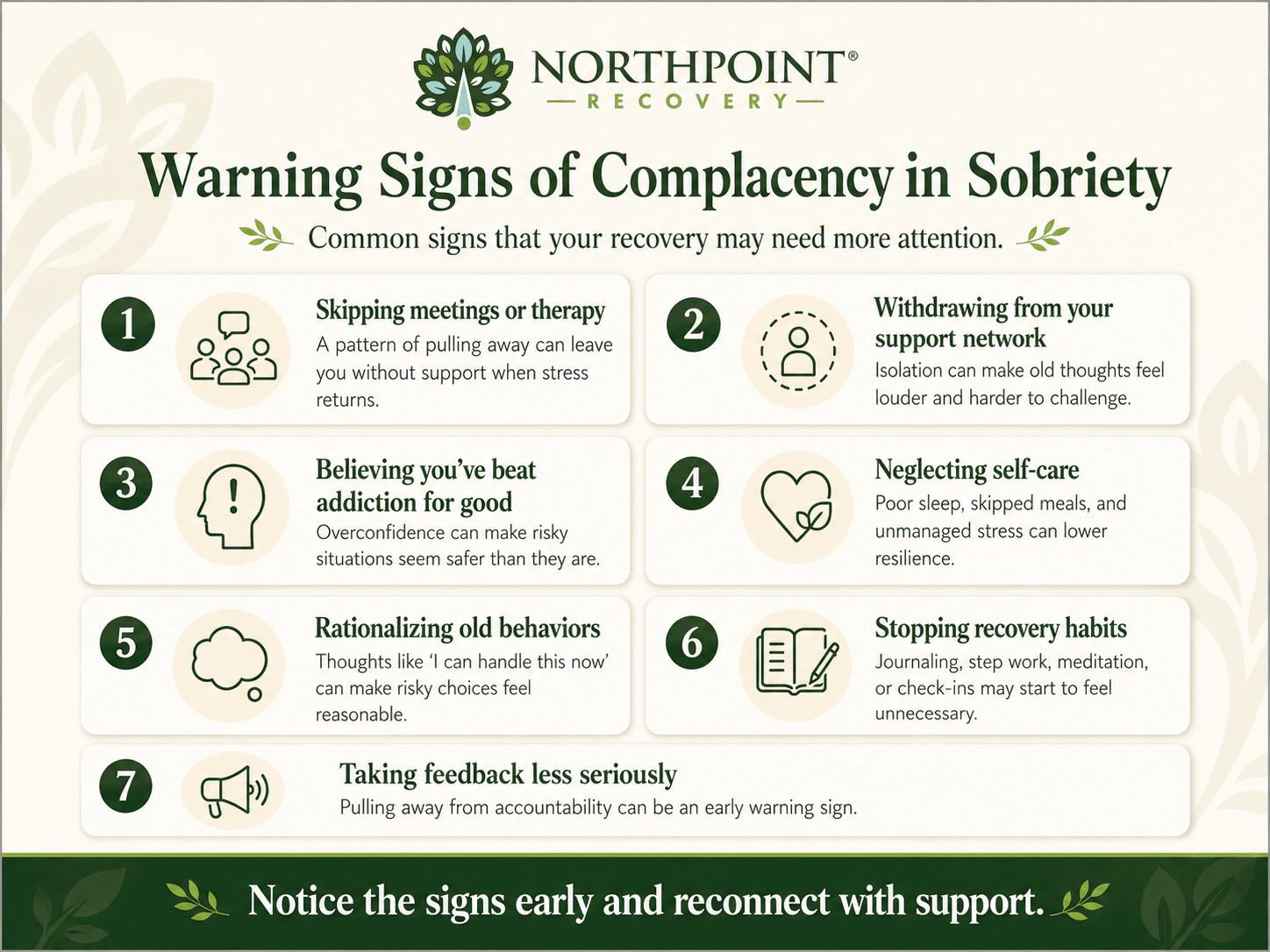
Common signs of complacency in sobriety include:
- Skipping meetings or therapy sessions. Missing one appointment may not seem like a big deal, but a pattern of pulling away can leave someone without support when stress returns.
- Withdrawing from a support network. Isolation can make old thoughts feel louder and make it easier to hide warning signs from others.
- Believing addiction has been “beat” for good. Overconfidence in sobriety can make high-risk situations seem safer than they are.
- Neglecting basic self-care. Poor sleep, skipped meals, less movement, and unmanaged stress can lower emotional resilience.
- Rationalizing old behaviors. Thoughts like “I can handle this now” or “It’s not the same as before” can make risky choices feel reasonable.
- Stopping recovery habits. Journaling, step work, prayer, meditation, check-ins, or self-inventory may start to feel unnecessary.
- Taking feedback less seriously. When someone stops listening to a sponsor, therapist, or trusted loved one, it may be a sign they’re drifting from accountability.
These warning signs don’t mean relapse is guaranteed. They mean it may be time to slow down, get honest, and reconnect with the support that has helped recovery last.
The Link Between Complacency and Relapse
Complacency doesn’t usually cause relapse overnight. It often creates distance between a person and the tools that help them stay grounded.
Complacency Can Lead to Disengagement
The progression often starts quietly. A person skips a meeting, avoids a hard conversation, stops checking in, or lets daily routines slip. At first, nothing major may happen.
That can make the behavior feel harmless. Over time, though, fewer support points can mean fewer chances to notice stress, cravings, resentment, loneliness, or other relapse warning signs.
Relapse Risk Can Increase When Support Decreases
Avoiding relapse in recovery often depends on staying connected before a crisis happens. Support systems give people a place to be honest, process stress, and ask for help before old coping patterns take over.
When complacency grows, a person may wait until things feel urgent before reaching out. By then, the risk may already be higher.
Relapse is not inevitable, and it does not erase the progress someone has made. It can be a sign that a person needs more support, a stronger relapse prevention plan, or a different level of care.
Recovery Still Needs Attention During Stable Seasons
Stable seasons are worth enjoying. They can be proof that recovery is working.
At the same time, stability is not a reason to stop caring for recovery. It’s a reason to keep protecting it. The goal is not to live in fear, but to stay aware of what helps you remain steady.
How to Avoid Complacency in Recovery
Avoiding complacency in recovery does not mean adding pressure or expecting perfection. It means staying active in the habits, relationships, and choices that help recovery remain strong.
Accept That Recovery Is Ongoing
One of the most important shifts is letting go of the idea that recovery has a finish line. Sobriety milestones matter, but they do not mean the work is over.
A healthier way to look at recovery is to see it as maintenance. A person may not need the same level of support forever, but they still need some level of support, honesty, and self-awareness.
Stay Connected to Support
Connection helps protect recovery because it keeps someone from carrying everything alone. Meetings, sponsors, sober friends, alumni groups, and trusted loved ones can all provide accountability.
This support is especially important during stress, grief, major life changes, or conflict. Those are the moments when old habits may feel familiar again.
A strong support network can help you notice changes before they turn into bigger problems.
Keep Working With a Therapist or Counselor
Ongoing therapy can help people work through the emotional patterns that may still show up after substance use stops. This may include anxiety, depression, trauma, shame, relationship stress, or difficulty managing anger.
Therapy can also help someone stay honest about their recovery. A counselor can help identify patterns that may be easy to miss alone.
This does not always mean a person needs intensive treatment again. Sometimes, regular outpatient support is enough to stay grounded.
Practice Honest Self-Reflection
Self-reflection helps someone notice what is happening under the surface. It creates space to ask, “Am I staying connected, or am I starting to drift?”
This can be done through journaling, step work, prayer, meditation, or a simple weekly check-in. The method matters less than the honesty behind it.
Helpful questions to ask include:
- Have I been avoiding people who support my recovery?
- Am I being honest about stress, cravings, or resentment?
- Have I stopped doing things that used to help me stay steady?
- Am I making excuses for choices I would have avoided earlier in recovery?
- Who can I talk to before this becomes harder to manage?
The more specific you get, the easier it is to take action early.
Set New Recovery Goals
A person may feel stuck in recovery when they stop growing. Once early goals are met, it can help to create new ones that support a meaningful life in sobriety.
These goals do not need to be huge. They may focus on health, relationships, work, education, spirituality, or emotional growth.
Examples include:
- Rebuilding trust with a loved one
- Creating a stronger sleep routine
- Attending a new recovery group
- Learning how to manage conflict more calmly
- Finding hobbies that support a sober lifestyle
- Working through a specific issue in therapy
Recovery can become more sustainable when it continues to feel connected to growth, purpose, and daily life.
Be of Service to Others
Helping others can remind someone why recovery matters. This might include sponsoring someone, sharing in a meeting, volunteering, joining an alumni event, or simply showing up for a person who is having a hard day.
Service should not replace personal recovery work. It should support it.
When done in a healthy way, helping others can build connection, humility, and gratitude. It can also make it harder to forget what early recovery felt like.
Know Your Triggers and Warning Signs
Triggers can change over time. Something that felt risky in early recovery may feel different later, and new stressors can appear as life changes.
That’s why it helps to keep revisiting your relapse prevention plan. Past work still matters, but it should not be treated as something you never need to review again.
Pay attention to patterns like isolation, resentment, boredom, exhaustion, secrecy, or spending time around people and places tied to past use. These signs are easier to manage when they’re named early.
How to Help a Loved One Who May Be Becoming Complacent
Watching someone drift from recovery can be scary. You may notice changes before they do, especially if they start pulling away from support or acting more confident than usual around risky situations.
Notice Patterns Without Assuming the Worst
Complacency does not always mean someone is using substances again. It may mean they’re struggling quietly, feeling disconnected, or underestimating how much support they still need.
Signs to watch for may include:
- Skipping meetings, therapy, or recovery events
- Spending more time alone
- Reconnecting with people tied to past substance use
- Becoming defensive about recovery
- Saying they no longer need help
- Neglecting sleep, meals, hygiene, or responsibilities
- Acting secretive or emotionally distant
Look for patterns, not one isolated moment. A single bad day is different from a steady shift away from support.
Start the Conversation With Care
Try to approach the conversation calmly. Accusations can make someone defensive, even if your concern is valid.
Focus on what you’ve noticed and how much you care. You might say, “I’ve noticed you haven’t been going to meetings as much, and you seem more withdrawn lately. I’m not here to judge you. I’m worried and want to support you.”
The goal is to open a door, not force an admission.
Encourage Support Before Things Escalate
A loved one may need to reconnect with a sponsor, therapist, alumni group, or treatment provider. They may also benefit from a higher level of support if cravings, mental health symptoms, or old behaviors are returning.
You don’t have to figure that out alone. A professional can help assess what kind of support makes the most sense.
If the person is in immediate danger or may harm themselves or someone else, seek emergency help right away.
Frequently Asked Questions About Complacency in Recovery
Can Someone With Years of Sobriety Become Complacent?
Yes. Complacency can develop at any stage of recovery, including after years of sobriety. Long-term sobriety can sometimes create a false sense of security, especially when the pain of active addiction feels far away.
Is Complacency the Same as Relapse?
No. Complacency is a mindset or pattern that can happen before relapse. Recognizing it early gives someone a chance to reconnect with support before the risk becomes more serious.
How Do I Know If I’m Becoming Complacent in My Recovery?
Common signs include skipping meetings, distancing from your support network, feeling overly confident in your sobriety, and neglecting the habits that helped you stay sober.
You may also notice more secrecy, more excuses, or less willingness to hear feedback from others.
What Should I Do If I Feel Complacent?
Talk to someone you trust as soon as possible. This may be a sponsor, therapist, counselor, sober friend, or supportive loved one.
You can also re-engage with your recovery plan by attending a meeting, scheduling therapy, reviewing your triggers, or asking for honest feedback from someone who knows your patterns.
When to Seek Additional Support
Reaching back out for help does not mean you have failed. It can be one of the strongest choices a person makes in recovery.
When Old Patterns Start Returning
Additional support may be helpful if you’re isolating, skipping recovery commitments, feeling cravings return, or spending more time around high-risk people or places.
It may also be time to reach out if you feel emotionally numb, unusually stressed, resentful, or disconnected from the reasons you chose recovery.
When Mental Health Symptoms Feel Harder to Manage
Depression, anxiety, trauma symptoms, grief, or relationship stress can make recovery feel heavier. If these symptoms are building, professional support can help you address them before they increase relapse risk.
Treatment may include individual therapy, outpatient support, alumni programming, continuing care, or another level of care based on your needs.
When You Need More Structure
Sometimes, a person doesn’t need to start over. They need more structure for the season they’re in.
An outpatient program, relapse prevention plan, or regular counseling can help someone rebuild consistency without waiting for things to reach a crisis point.
If you or someone you love is struggling to stay engaged in recovery, our team is here to help. Reaching out now can make it easier to reconnect with support, strengthen your recovery plan, and move forward with more stability.
Complacency in addiction recovery is common, but it can be addressed. It is not a moral failing or proof that someone does not care about their sobriety.
Recovery is active, not passive. The habits that helped you get sober can also help you stay grounded as life changes. With honesty, support, and steady attention, it’s possible to notice complacency early and return to the practices that protect your progress.
Strengthen Your Recovery With the Right Support
Complacency in recovery can happen quietly. You may start skipping meetings, pulling away from support, or telling yourself you can handle old risks because life feels more stable. These signs don’t mean you’ve failed, but they do mean it may be time to reconnect with the tools that help protect your sobriety.
Northpoint Recovery helps people build stronger recovery plans through inpatient and outpatient treatment, relapse prevention support, and ongoing guidance through our alumni network. Our team can help you understand what level of care may fit your needs, whether you’re feeling disconnected, facing cravings, or worried about returning to old patterns.
If you or someone you love is struggling to stay engaged in recovery, reach out today. Support is available, and taking action now can help you move forward with more stability and confidence.