


Medication can feel like a complicated topic in recovery. Some people worry that taking anything that affects their mood could “count against” their sobriety. Others wonder if antidepressants can make recovery easier, especially when depression, anxiety, or trauma symptoms are part of the picture.
SSRIs are one type of antidepressant that may be used during addiction recovery when they’re prescribed by a medical provider. They don’t create a high, and they don’t replace the work of recovery. Instead, they may help treat mental health symptoms that can make sobriety harder to maintain.
The key is using them the right way. SSRIs should be taken with medical guidance, honest communication, and a full recovery plan that includes therapy, support, and healthy coping skills.
What Are SSRIs?
SSRIs are selective serotonin reuptake inhibitors. They’re a common type of antidepressant used to treat depression, anxiety, panic disorder, PTSD, and other mental health conditions.
Serotonin is a brain chemical that helps regulate mood, sleep, stress, and emotional balance. SSRIs help make serotonin more available in the brain, which may improve symptoms over time.
Common SSRIs include:
- Sertraline, also known as Zoloft
- Fluoxetine, also known as Prozac
- Escitalopram, also known as Lexapro
- Citalopram, also known as Celexa
- Paroxetine, also known as Paxil
- Fluvoxamine, also known as Luvox
SSRIs don’t work right away. Many people need several weeks before they notice a steady improvement. Some people also need a dosage adjustment or a different medication before finding the right fit.
Are SSRIs Considered a Relapse?
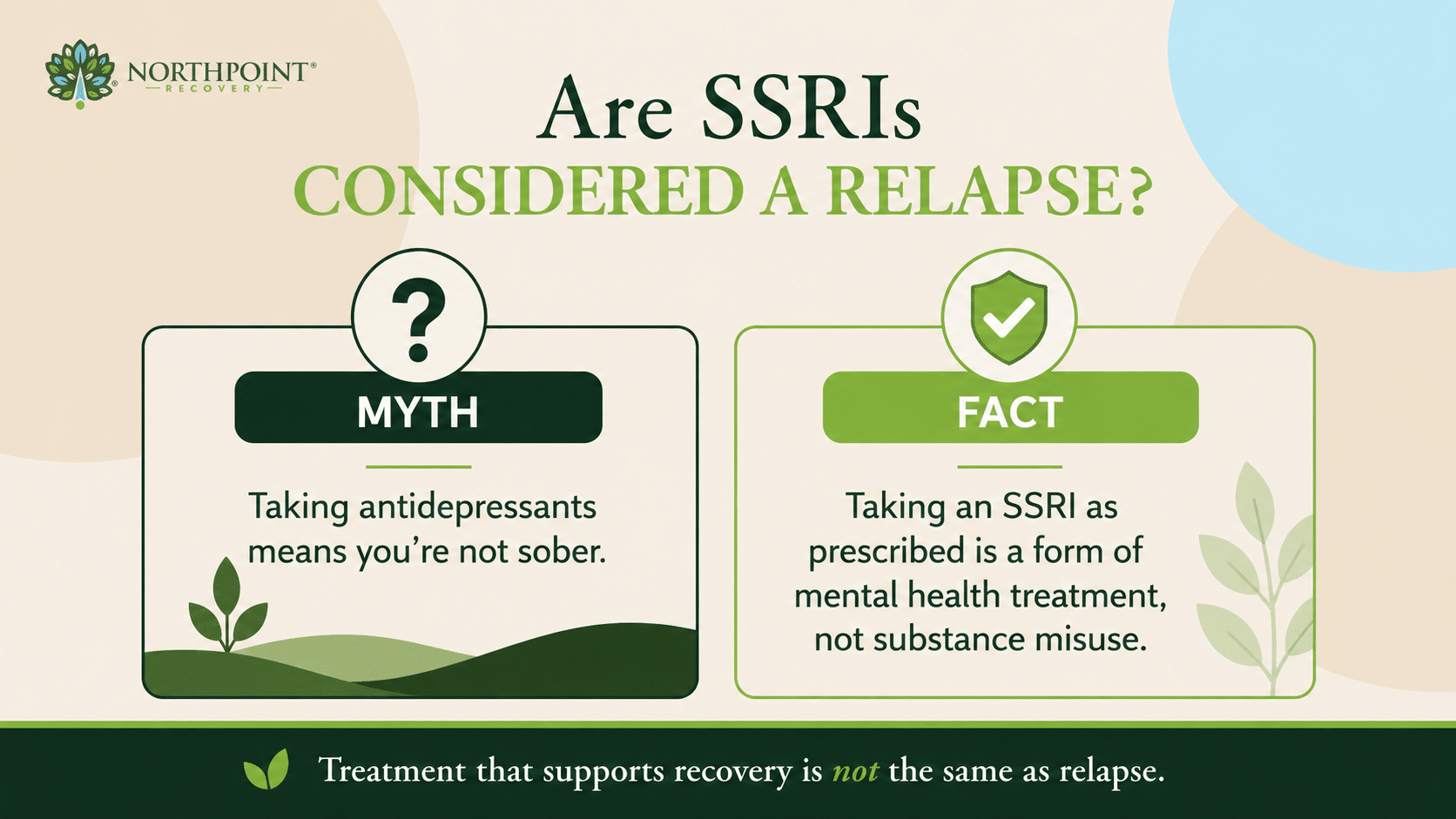
Taking an SSRI as prescribed is not the same as misusing drugs or alcohol.
SSRIs do not cause intoxication. They do not create the immediate high, rush, or reward effect that addictive substances can cause. When used correctly, they’re a form of mental health treatment.
That said, it makes sense for people in recovery to feel cautious about medication. Addiction can change the way a person thinks about substances, control, and relief. Some people may worry that needing medication means they’re not “really” sober or not strong enough to recover on their own.
That fear is common, but it can also keep people from getting help they truly need.
Recovery is not about avoiding all medical treatment; it’s about building a life that supports sobriety, health, and stability. For some people, that includes taking medication for depression, anxiety, PTSD, or another mental health condition.
Can SSRIs Help During Addiction Recovery?
SSRIs are not addiction medications. They are not the same as medications used to treat alcohol use disorder, opioid use disorder, or nicotine dependence.
Their role in recovery is usually different. SSRIs may help when untreated depression, anxiety, panic symptoms, or trauma symptoms are making it harder to stay sober, attend treatment, sleep, manage stress, or cope with cravings.
For example, a person with depression may have low energy, hopeless thoughts, and little motivation to keep going. A person with anxiety may feel overwhelmed by group therapy, social situations, or everyday stress. A person with PTSD may use substances to numb memories, fear, or sleep problems.
In these cases, treating the mental health condition can make recovery feel more manageable.
Research on SSRIs in people with substance use disorders is mixed, but a 2022 meta-analysis on SSRIs, mental health symptoms, and substance use disorders found that SSRIs may improve depression and anxiety symptoms for some people with addiction, though results can vary based on the person, diagnosis, and substance involved.
That’s why SSRIs should not be framed as a cure for addiction. They may be one helpful part of treatment when a co-occurring mental health condition is present.
When SSRIs May Be Helpful in Recovery
SSRIs may be worth discussing with a doctor, psychiatrist, or treatment provider if mental health symptoms continue after the early stage of sobriety.
Early recovery can come with mood swings, anxiety, sleep problems, and emotional discomfort. Some of this may improve as the body and brain heal. But symptoms that last, worsen, or interfere with daily life may need more support.
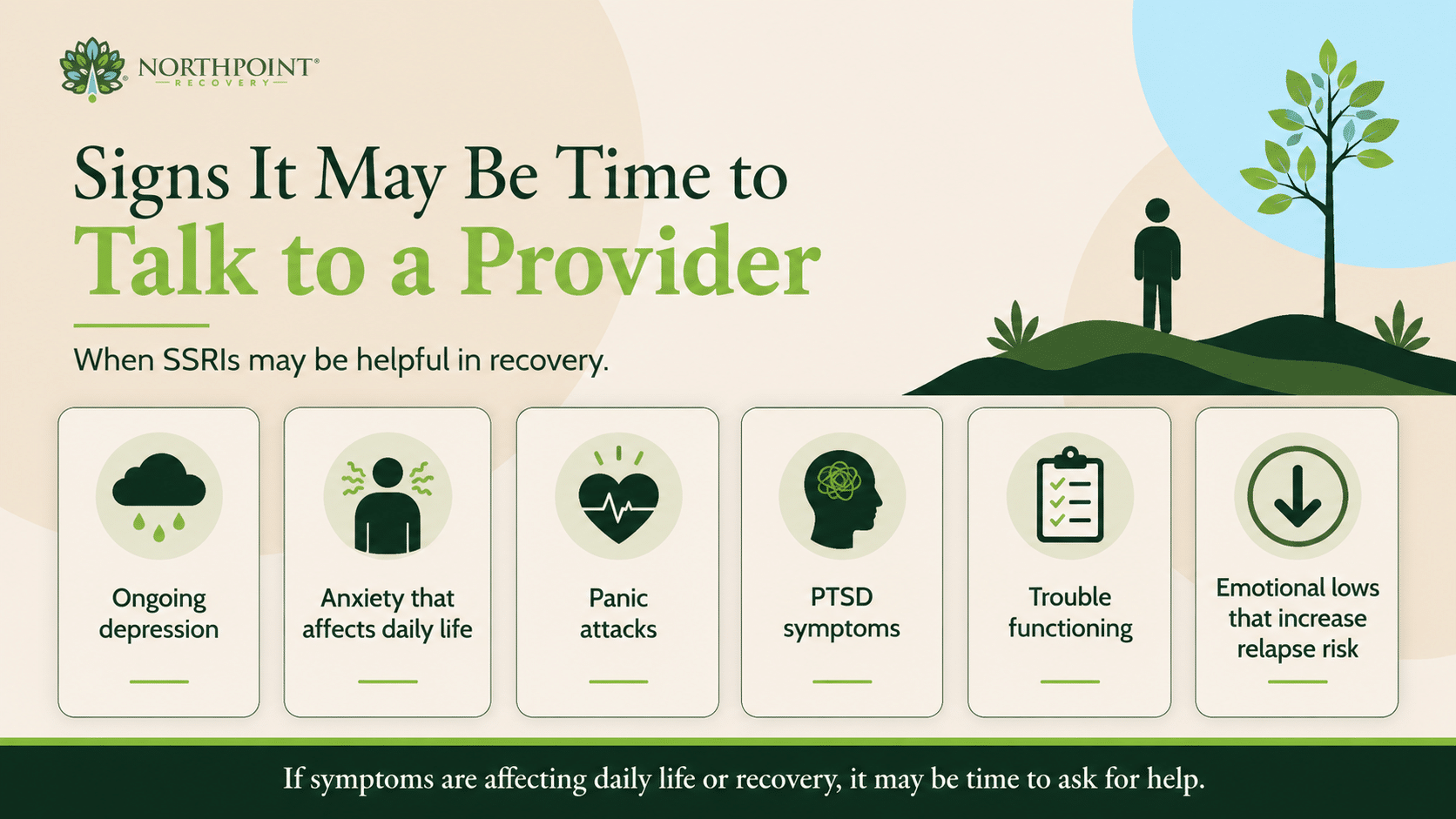
A provider may consider an SSRI if someone is dealing with:
- Ongoing depression
- Anxiety that affects daily life
- Panic attacks
- PTSD symptoms
- Obsessive or intrusive thoughts
- Trouble functioning at work, school, or home
- Emotional lows that increase relapse risk
- Sleep disruption tied to anxiety or depression
- Loss of interest in life, relationships, or recovery
The goal is not to numb feelings or avoid recovery work. The goal is to treat symptoms that may be making recovery harder than it needs to be.
How to Use SSRIs Safely in Recovery
Using SSRIs successfully requires consistency, honesty, and medical support. These medications can be helpful, but they work best when they’re part of a full treatment plan.
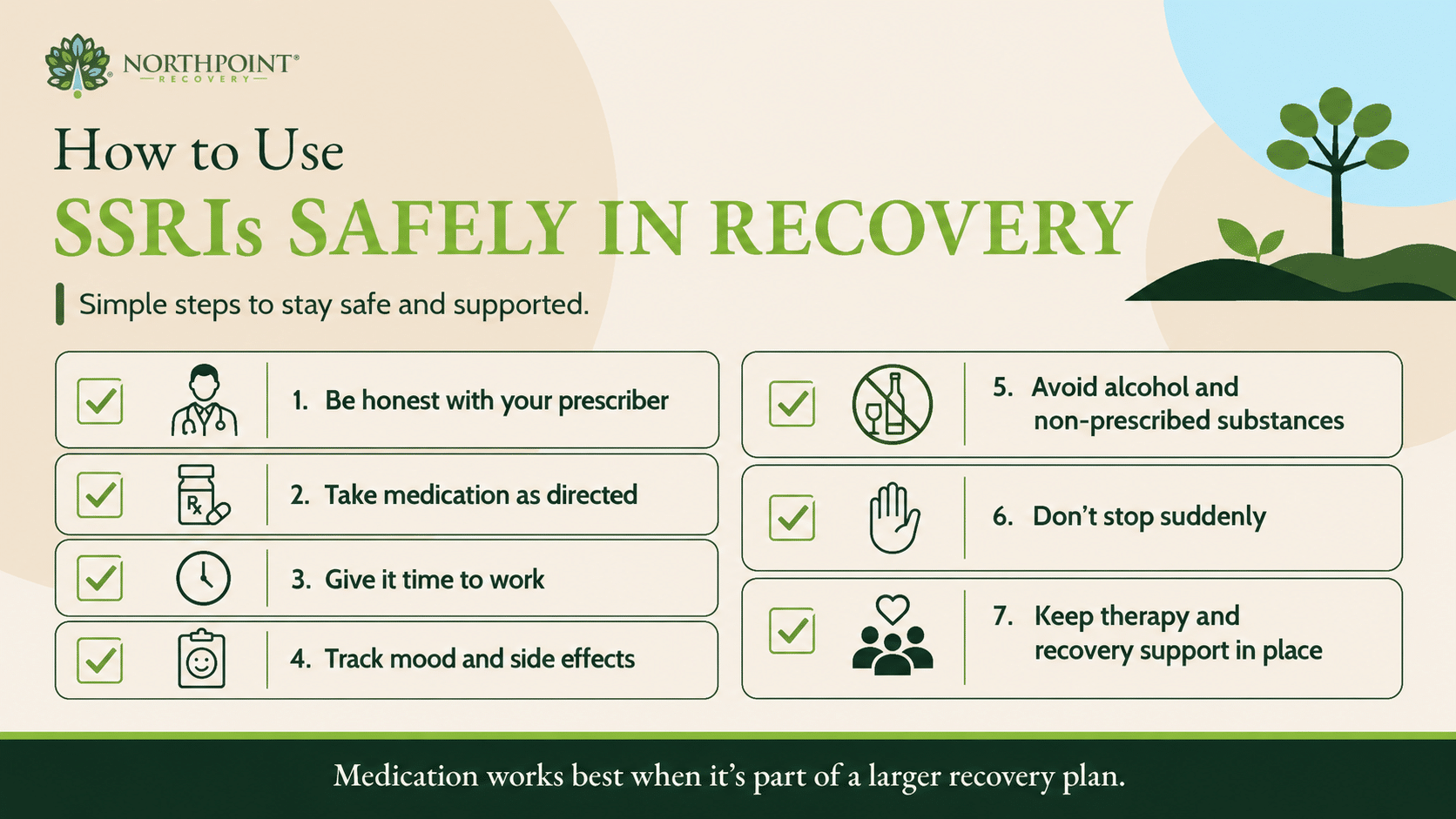
Be Honest With Your Prescriber
Your doctor or psychiatrist needs the full picture to make safe decisions.
Tell them about your substance use history, current recovery status, cravings, recent relapses, and any alcohol or drug use. Also share any medications, supplements, sleep aids, or over-the-counter products you take.
This information helps your provider choose a medication, avoid unsafe combinations, and watch for side effects.
It may feel uncomfortable to be that honest, especially if relapse or cravings are part of the conversation. But your provider can only help you safely if they know what’s really going on.
Take the Medication Exactly as Prescribed
SSRIs need time and consistency to work.
Taking more than prescribed won’t make the medication work faster. Skipping doses can make side effects worse or cause symptoms to come back. Stopping and restarting can also make it harder to know if the medication is helping.
Try to take your medication at the same time each day. Some people use a pill organizer, phone reminder, or daily routine to stay consistent.
If you miss a dose, follow your provider’s instructions or ask your pharmacist what to do. Don’t double up unless a medical professional tells you to.
Give It Time to Work
Many people don’t feel the full benefit of an SSRI right away. Some notice small changes first, like better sleep, fewer crying spells, or more emotional steadiness. Others may need several weeks before they feel a clear difference.
This waiting period can be frustrating, especially in recovery. When someone is used to fast relief from substances, slow improvement can feel discouraging.
That doesn’t mean the medication isn’t working. It may need more time, a dose change, or a different option. Stay in touch with your provider so they can guide the next step.
Track Your Mood, Side Effects, and Cravings
Tracking how you feel can help you and your provider understand what’s changing.
You don’t need a complicated system. A short note each day can help you spot patterns over time.
You may want to track:
- Mood
- Anxiety level
- Sleep
- Appetite
- Energy
- Side effects
- Cravings
- Substance use, if relapse occurs
- Suicidal thoughts or self-harm urges
This information can help your provider decide whether to continue the medication, adjust the dose, or try another treatment.
It can also help you see progress that might be hard to notice day to day.
Watch for Side Effects
SSRIs can cause side effects, especially when starting the medication or changing the dose. Some side effects improve with time, while others may need medical attention.
Common side effects may include:
- Nausea
- Headaches
- Dry mouth
- Sleep changes
- Restlessness
- Fatigue
- Sexual side effects
- Appetite changes
- Increased anxiety at first
Tell your provider if side effects feel severe, don’t improve, or make you want to stop the medication.
You should reach out right away if you notice worsening depression, suicidal thoughts, severe agitation, unusual behavior changes, or signs of mania, such as feeling unusually energized, impulsive, or unable to sleep.
If you’re in immediate danger or thinking about harming yourself, call 911 or the 988 Suicide & Crisis Lifeline.
Avoid Alcohol and Non-Prescribed Substances
Alcohol and drugs can make it harder for SSRIs to work as intended. They can also worsen depression, anxiety, sleep problems, and side effects.
This can create a confusing cycle. A person may think their medication isn’t working, when alcohol or substance use is actually interfering with their progress.
This is especially important in early recovery, when the brain and body are still adjusting. The more stable and consistent your recovery environment is, the easier it is to understand how the medication is affecting you.
If you relapse while taking an SSRI, tell your provider. You won’t be the first person to have that conversation, and it’s better to get help early than to hide it.
Don’t Stop Suddenly
Do not stop taking an SSRI without talking to your provider first.
Stopping suddenly can cause uncomfortable symptoms, including dizziness, nausea, mood swings, anxiety, sleep problems, flu-like feelings, or a return of depression symptoms.
This does not mean SSRIs are addictive in the same way drugs or alcohol can be addictive. It means your body may need time to adjust when the medication is reduced.
If you and your provider decide it’s time to stop, they can help you taper safely.
Keep Therapy and Recovery Support in Place
SSRIs can help treat mental health symptoms, but they don’t replace recovery support.
Medication may help you feel steady enough to do the deeper work. Therapy, group support, relapse prevention planning, and healthy routines help you build the skills needed to stay sober long term.
A strong recovery plan may include:
- Individual therapy
- Group therapy
- Dual diagnosis treatment
- Peer support meetings
- Family therapy
- Relapse prevention planning
- Medication management
- Aftercare support
- Healthy sleep, meals, and movement
Medication can support recovery, but connection, structure, and coping skills still matter.
Questions to Ask Your Doctor About SSRIs in Recovery
If you’re considering an SSRI, it can help to bring questions to your appointment. This gives you a clearer understanding of what to expect and how to use the medication safely.
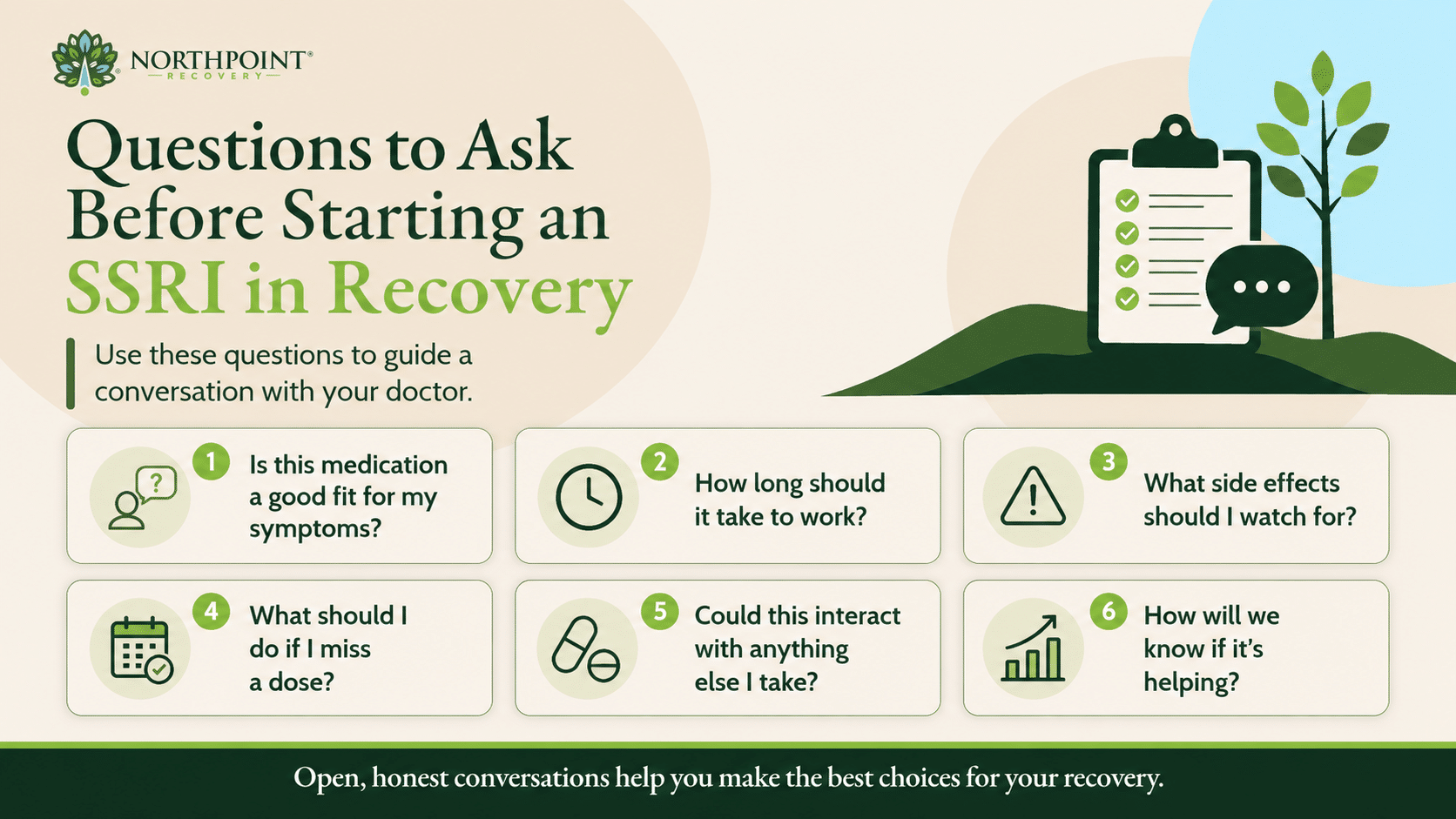
You may want to ask:
- Is an SSRI a good fit for my symptoms?
- Could my depression or anxiety be related to withdrawal or early recovery?
- How long should it take to feel a difference?
- What side effects should I watch for?
- Could this interact with any other medication I take?
- Is it safe with my recovery history?
- What should I do if I miss a dose?
- What should I do if I relapse?
- How will we know if the medication is helping?
- What are my options if this medication doesn’t work?
- How long might I need to take it?
- What’s the safest way to stop if I no longer need it?
These questions can help you stay informed without trying to manage the medication alone.
What SSRIs Can and Can’t Do in Recovery
SSRIs can be helpful, but it’s important to have realistic expectations.
An SSRI may help reduce depression, anxiety, panic symptoms, or trauma-related symptoms. It may help you feel more emotionally steady. It may make it easier to show up for treatment, sleep more consistently, or manage stress without turning to substances, but SSRIs won’t do the full work of recovery for you.
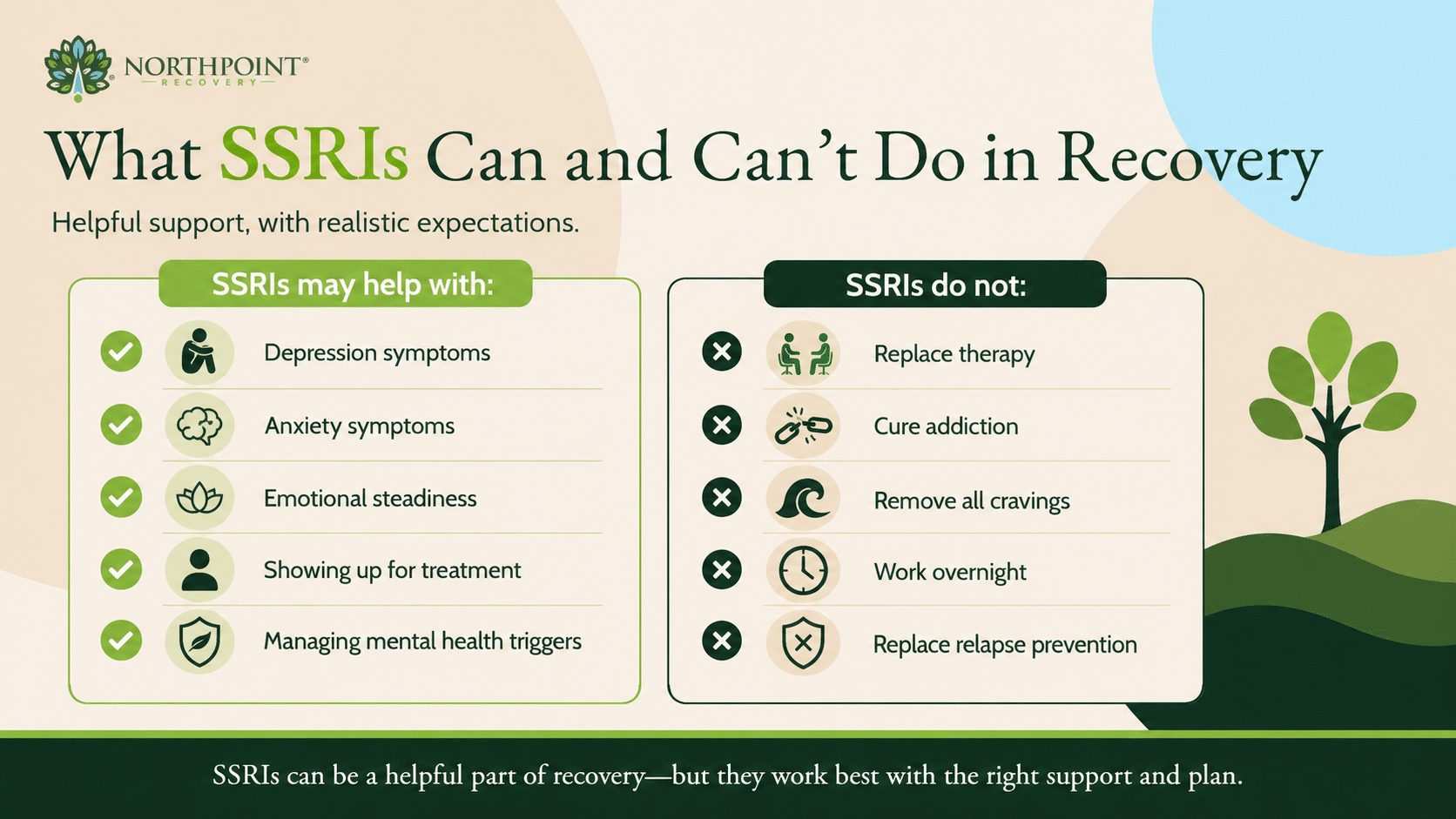
They won’t remove every craving. They won’t fix relationships overnight. They won’t erase trauma, replace therapy, or make hard emotions disappear. They also may not be the right medication for every person.
That doesn’t make them bad or ineffective. It means they should be used for the right reason.
The purpose of an SSRI in recovery is to support mental health, not replace the recovery process.
SSRIs and Dual Diagnosis Treatment
Many people in addiction recovery are also living with a mental health condition. This is often called a dual diagnosis or co-occurring disorder.
Depression, anxiety, PTSD, bipolar disorder, and other conditions can all affect substance use and recovery. If mental health symptoms go untreated, recovery may feel harder to maintain.
Dual diagnosis treatment addresses both concerns at the same time. This matters because addiction and mental health symptoms can feed into each other.
For example, a person may drink to calm anxiety, then feel more anxious after drinking. Someone with depression may use drugs to feel temporary relief, then feel worse as the effects wear off. A person with trauma may use substances to sleep or numb memories, then feel overwhelmed when trying to stop.
SSRIs may be part of dual diagnosis care for some people, but they should be paired with therapy, relapse prevention, and ongoing support.
Find Support That Treats the Full Picture
If you’re taking SSRIs or considering antidepressants in recovery, the most important step is getting care that supports both your mental health and your sobriety. Medication can be one helpful part of treatment, but it works best when it’s paired with therapy, structure, and ongoing support.
At Northpoint Recovery, we help people address addiction and co-occurring mental health concerns through treatment plans built around their needs. Our team can help you better understand your options and find the level of care that feels right for where you are now.
Contact us today to learn more and take the next step toward a healthier, more stable future.