


Relapse doesn’t mean failure. It’s a common part of recovery, especially early on. But that doesn’t mean it’s inevitable or you’re powerless to prevent it.
Most relapses don’t come out of nowhere. They usually follow a pattern, and that pattern starts with a trigger. When you know your personal triggers, it’s easier to recognize warning signs early and take steps to stay on track.
This post will explain relapse triggers, the most common types, and how to spot them before they catch you off guard.
What is a Relapse Trigger?
A trigger is anything that increases the urge to use substances. Sometimes it’s external, like a place, person, or situation. Other times, it’s internal, like a thought, memory, or emotion.
Triggers don’t cause relapse on their own, but they often start the mental chain reaction that can lead to one if not managed early.
Understanding your triggers helps you stay grounded. It gives you a heads-up when you’re heading into risky territory and helps you plan how to respond before the cravings take over.
What Causes Relapse in Recovery?
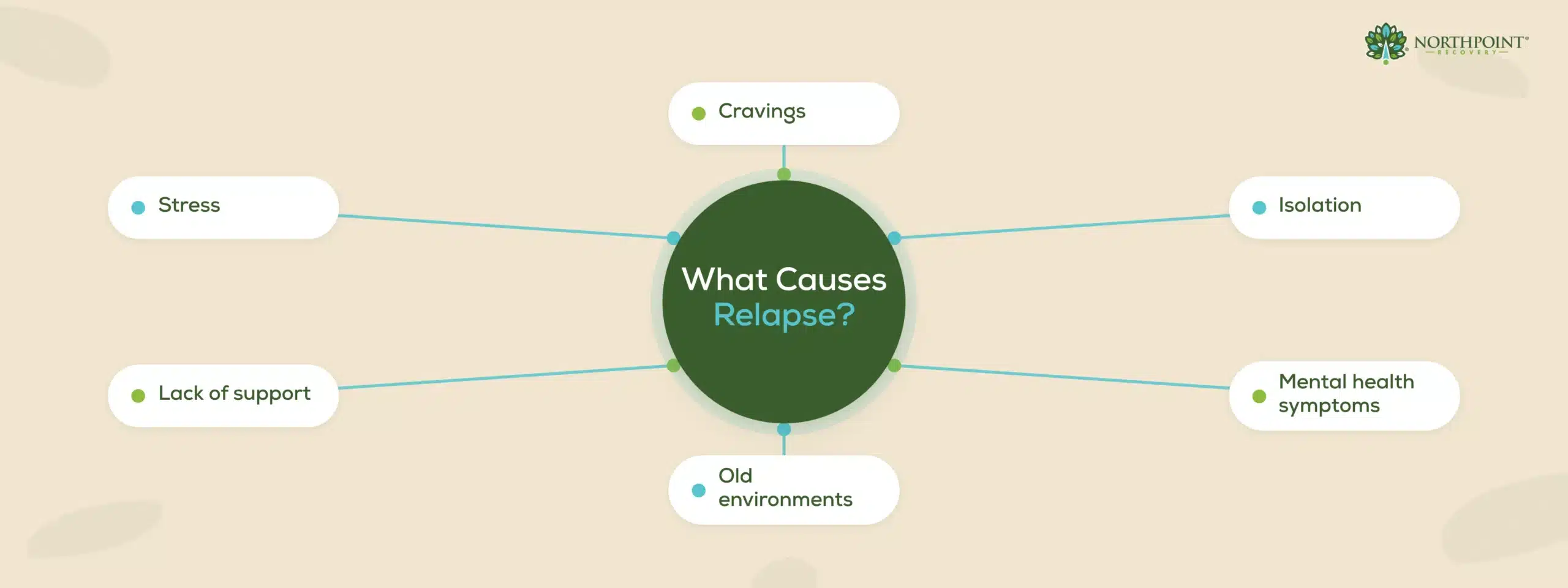
Relapse is usually caused by a mix of triggers, cravings, stress, untreated mental health symptoms, low support, and gaps in a person’s recovery plan. It often builds over time through emotional, mental, and physical stages before a person returns to substance use.
A trigger may start the urge to use, but relapse usually happens when that trigger meets other risk factors. For example, someone may feel stressed, stop attending meetings, sleep poorly, isolate from support, and start thinking they can handle “one time.” Each factor adds pressure until using begins to feel easier than staying sober.
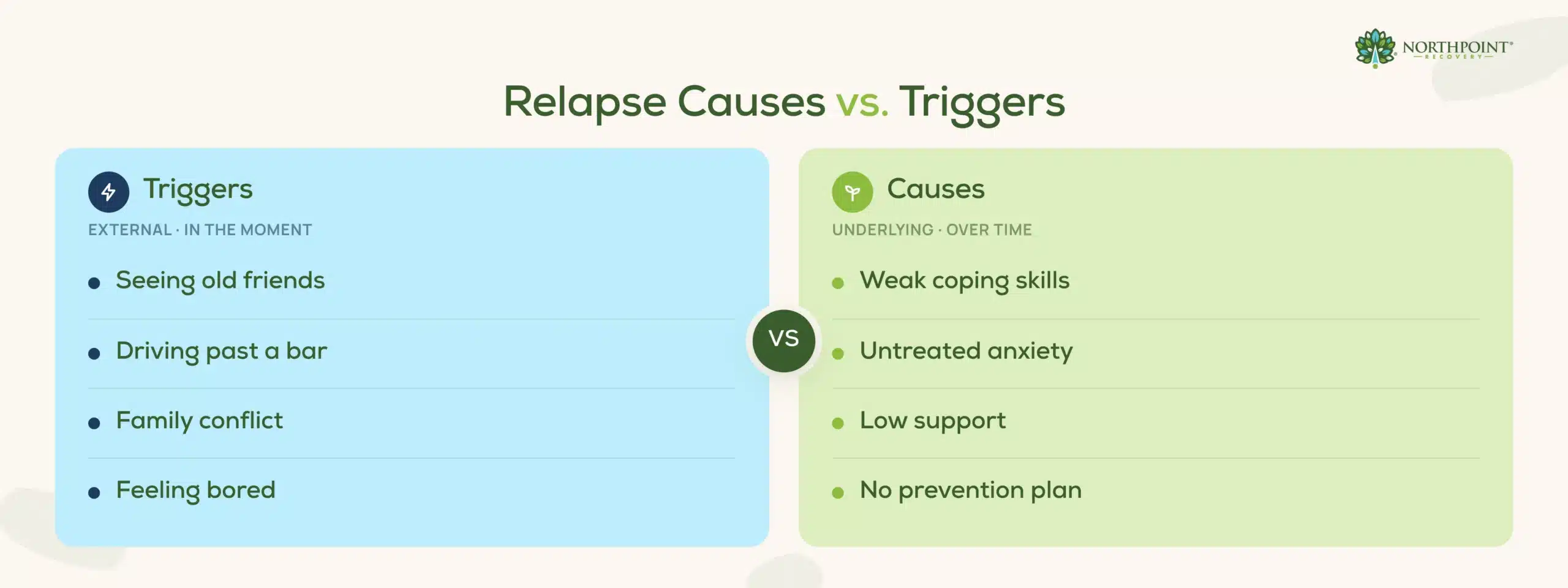
Relapse Causes vs. Relapse Triggers
A relapse trigger is the situation, emotion, memory, or cue that sparks the urge to use. A relapse cause is the deeper risk factor that makes that urge harder to manage. For example, walking past an old bar may be the trigger, but untreated anxiety, poor sleep, isolation, or overconfidence may be the reason the craving becomes harder to resist.
In most cases, relapse doesn’t happen because of one bad moment. It happens when warning signs build up and go unaddressed.
What Are the Common Triggers of Relapse?
Relapse is usually caused by a mix of emotional, physical, social, and environmental factors. A trigger may start the craving, but relapse often happens when that trigger builds on stress, isolation, untreated mental health symptoms, weak support, or gaps in a person’s recovery plan.
Everyone’s relapse risks look different, but many fall into a few common categories. Understanding these causes can help you spot warning signs early and take action before cravings become harder to manage.
Stress or Overwhelm
Stress is one of the most common causes of relapse. When someone has used substances to cope with pressure, pain, or discomfort in the past, stress can make old coping patterns feel tempting again.
In recovery, stress can come from work, finances, legal issues, family conflict, or the pressure to rebuild life after addiction. Without healthy coping tools, the urge to numb out can feel stronger.
Examples of stress-related relapse risks include:
- Arguing with a partner or family member
- Losing a job or struggling at work
- Taking on too much and feeling burned out
- Facing legal, financial, or relationship consequences from the past
- Feeling pressure to “have it all together” in recovery
Untreated Mental Health Symptoms
Anxiety, depression, trauma, and other mental health symptoms can raise the risk of relapse when they go untreated. Many people use substances to escape racing thoughts, emotional pain, panic, numbness, or memories they don’t know how to manage.
Recovery becomes harder when the substance is removed but the underlying pain is still there. This is why mental health treatment can play such an important role in long-term sobriety.
Examples of mental health-related relapse risks include:
- Panic attacks or constant anxiety
- Depression, hopelessness, or low motivation
- Trauma reminders or flashbacks
- Mood swings that feel hard to control
- Avoiding therapy, medication, or other support
Isolation or Loneliness
Feeling disconnected can make relapse more likely. When someone isolates, it becomes easier to believe no one would notice or care if they used again. That thought can grow stronger the longer they go without meaningful support.
Addiction often grows in secrecy. Recovery needs connection, even when reaching out feels uncomfortable at first.
Examples of isolation-related triggers:
- Skipping meetings or avoiding check-ins
- Losing touch with supportive friends or family
- Spending long periods alone without structure
- Avoiding social settings due to anxiety or shame
- Moving to a new area without a support system
Withdrawal Symptoms and Lingering Cravings
Relapse can happen when the body and brain are still adjusting to life without substances. Some people deal with cravings, sleep problems, mood changes, irritability, low energy, or trouble focusing after the early withdrawal period ends.
These symptoms can make recovery feel frustrating or discouraging. When someone doesn’t know these symptoms can happen, they may start to believe sobriety is not working.
Examples of withdrawal-related relapse risks include:
- Strong cravings that come and go without warning
- Trouble sleeping or feeling tired all the time
- Feeling irritable, restless, or emotionally drained
- Struggling to focus at work, school, or home
- Wanting to use again to feel “normal”
Negative Emotions, Shame, Anger, Grief, or Boredom
Strong emotions can feel overwhelming when someone is still learning how to handle them without substances. Many people relapse because they want relief from how they feel, not because they planned to use.
Shame, anger, grief, boredom, and loneliness can all make cravings harder to manage. These emotions become even riskier when someone keeps them hidden.
Examples of emotion-related relapse risks include:
- Feeling ashamed about things that happened during active addiction
- Going through a breakup, death, or major loss
- Getting stuck in negative self-talk
- Feeling angry, restless, or discouraged
- Having too much unstructured time, feeling bored with nothing to focus on
Overconfidence or Complacency
Confidence in recovery is healthy, but overconfidence can lead someone to stop doing the things that helped them stay sober. The truth is, relapse can happen after years of stability.
Complacency is risky because it often feels harmless at first. A person may skip support groups, reconnect with old friends, or tell themselves they can handle a high-risk situation.
Examples of overconfidence-related triggers:
- Thinking “I’m good now” and stopping therapy or support groups
- Spending time in old environments without a safety plan
- Keeping substances nearby “just in case”
- Starting to justify risky behaviors or downplay past consequences
- Minimizing cravings or dismissing early warning signs
Weak Aftercare or Lack of Ongoing Support
Treatment is an important step, but recovery usually needs continued support. Relapse risk can increase when someone leaves treatment without a clear plan for therapy, meetings, sober living, medication management, or regular check-ins.
A strong aftercare plan gives people structure after treatment ends. It also helps them know what to do when cravings, stress, or warning signs show up.
Examples of aftercare-related relapse risks include:
- Leaving treatment without a relapse prevention plan
- Missing follow-up appointments
- Stopping therapy too soon
- Not having sober people to call during cravings
- Returning home without enough structure or support
Poor Sleep, Routine, or Self-Care
Recovery is harder when the body is worn down. Poor sleep, missed meals, too much free time, and lack of routine can make cravings feel stronger and emotions harder to manage.
A steady routine can lower relapse risk because it gives the day more structure. It also helps reduce boredom, stress, and impulsive choices.
Examples of routine-related relapse risks include:
- Staying up late and sleeping at odd hours
- Skipping meals or neglecting basic needs
- Having too much unplanned time
- Losing interest in healthy habits
- Feeling bored, restless, or disconnected from purpose
Being Around Old People, Places, or Habits
Associations are powerful. Being around the people you used with, visiting places tied to substance use, or slipping back into old routines can trigger cravings even if you’re committed to staying sober.
Sometimes these triggers come up unexpectedly. Other times, it’s the result of thinking you can handle it. Either way, it’s important to know your limits and avoid unnecessary exposure when you’re still rebuilding. Meeting and spending time with sober friends can help!
Examples of environment-related triggers:
- Hanging out with friends who still use
- Going to bars, clubs, or old party spots “just to hang out”
- Driving by familiar places where you used or bought
- Listening to music or watching shows tied to past use
- Falling back into daily routines that were part of using
Easy Access to Substances
Relapse becomes more likely when substances are easy to get. Even a strong recovery plan can feel harder to follow when alcohol, drugs, or old contacts are close by.
Reducing access can create more time between a craving and a decision. That pause can help someone call support, leave the situation, or use a coping skill before the craving takes over.
Examples of access-related relapse risks include:
- Keeping alcohol or drugs in the home
- Staying in contact with dealers or old using friends
- Going to events where substances are present
- Having unused prescriptions available
- Living with someone who still uses substances
How to Manage or Avoid Triggers in Daily Life
Understanding your triggers is important—but what you do with that awareness is what actually protects your recovery. Avoiding every difficult situation forever isn’t realistic, but building a plan to handle them when they come up? That’s something you can control.
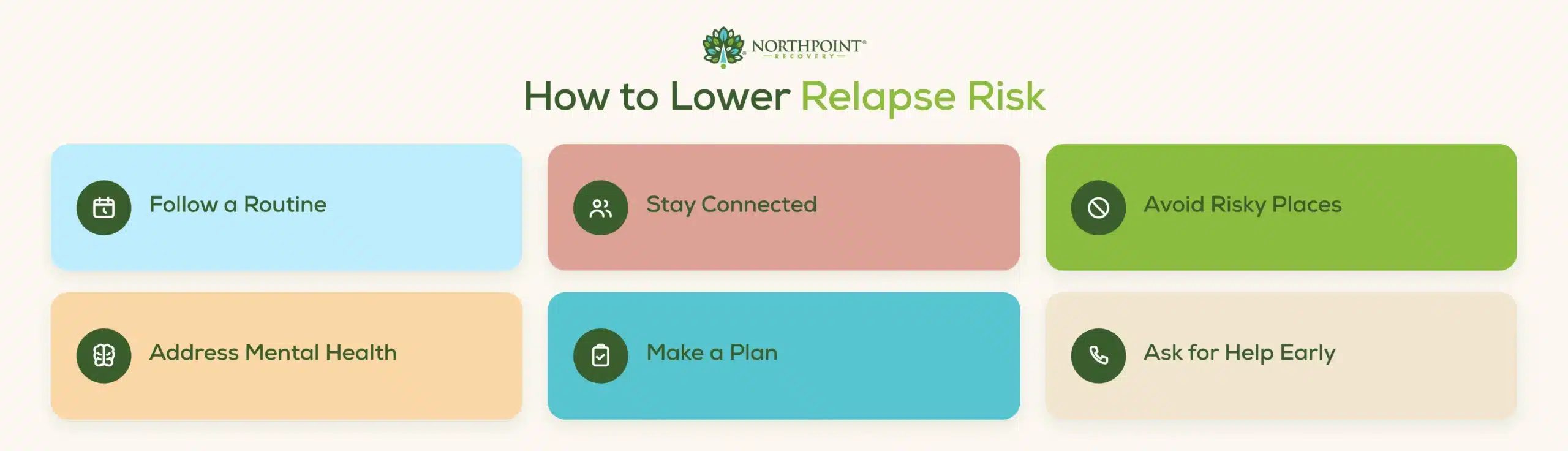
Here are five strategies to help you recognize, prepare for, and move through triggers without losing progress.
Identify Your Personal Triggers
Triggers aren’t always obvious. The more specific you get about what sets off cravings or negative thinking, the better prepared you’ll be to respond. Start by tracking what was happening—both around you and inside you—the last time you felt the urge to use.
Try:
- Keeping a “trigger log” where you jot down what you were doing, feeling, or thinking when cravings appeared
- Looking for patterns over time (certain people, emotions, times of day)
- Talking through past relapses or close calls with a sponsor, therapist, or trusted peer to better understand what led up to them
- Using a HALT check-in (Am I Hungry, Angry, Lonely, or Tired?) to spot emotional triggers early
Build a Daily Routine That Supports Recovery
Structure gives your brain fewer opportunities to wander into risky territory. A stable routine can also help regulate your mood, energy, and motivation—especially during stressful or emotionally flat periods.
Try:
- Setting consistent wake-up and sleep times, even on weekends
- Scheduling meals, movement, and downtime throughout your day
- Planning at least one meaningful activity daily (support group, walk, journaling, hobby, etc.)
- Breaking large tasks into small, manageable steps so you don’t get overwhelmed and shut down
Have a Relapse Prevention Plan
Knowing what you’ll do when a trigger hits makes it easier to stay grounded in the moment. A good relapse prevention plan doesn’t just name the triggers—it includes your responses.
Try:
- Listing 3 people you can call or text when a craving shows up
- Writing down 2 safe places you can go if you need distance or a reset
- Preparing a go-to response for invitations to high-risk situations (“Thanks, but I’m focusing on staying sober right now”)
- Keeping grounding tools nearby (music, breathing exercises, calming visuals)
Practice Emotional Regulation Skills
You don’t need to master your emotions—you just need to know how to respond to them without turning to substances. The more tools you have to calm your system, the easier it becomes to ride out intense feelings.
Try:
- Deep breathing (4 seconds in, 4 hold, 4 out, 4 hold) to slow your nervous system
- Naming your emotion without judgment (“I feel anxious right now, and that’s okay”)
- Moving your body—walk, stretch, or shake out tension when emotions build up
- Journaling or voice notes to get thoughts out of your head and into perspective
Stay Connected to Support, Even When You Feel “Fine”
Relapse often begins with disconnection. Even if you feel like you’ve got things under control, staying plugged into your support system keeps you grounded and gives others a chance to check in before things slide.
Try:
- Attending at least one meeting, group, or therapy session per week (more in early recovery)
- Scheduling regular check-ins with a sponsor or accountability partner
- Reaching out proactively when something feels off—even if you can’t name it
- Avoiding the mindset of “I don’t need help anymore”—support is a strength, not a crutch
What to Do If You Slip
If a relapse or slip happens, it doesn’t erase your progress. What matters most is how quickly you respond.
Here’s what to do next:
- Pause before spiraling. A slip isn’t proof you’ve failed—it’s a sign something in your plan needs support.
- Tell someone you trust. You don’t have to unpack everything right away. Just let someone know what happened so you’re not carrying it alone.
- Get back to basics. Revisit your routine, reconnect with your support system, and re-engage in treatment if needed.
- Reflect without shame. Ask: What led up to the relapse? What could I do differently next time? Use it as information, not ammunition to lower your self-worth.
Understanding Your Triggers Is a Form of Strength
Relapse triggers don’t make you weak; they make you human. But the more you understand them, the more power you have to interrupt the cycle before it starts.
Recovery isn’t about avoiding every hard moment. It’s about learning how to face those moments with clarity, tools, and support. And the better you get at that, the more stable and sustainable your recovery becomes.
Need help building a relapse prevention plan that works in real life? Contact us today — our treatment programs include relapse prevention plans to help you stay grounded, supported, and in control of your next step.