


Depression isn’t always easy to spot, especially when someone appears to be functioning well in their daily life. High-functioning depression isn’t a formal clinical diagnosis — it’s a descriptive term for depression someone manages to hide while still keeping up with work, relationships, and daily responsibilities, all while carrying a persistent sense of sadness or emptiness underneath.
Because it’s an informal label rather than a diagnosis, high-functioning depression can describe more than one condition. It often overlaps with persistent depressive disorder (formerly called dysthymia), which the National Institute of Mental Health describes as less severe but longer-lasting depression symptoms that usually last at least two years. But someone can also appear high-functioning while living with major depressive disorder. What these experiences share is that the outward signs don’t match the more visible symptoms people expect from depression — which is exactly why recognizing it early matters for getting help before it deepens.
Key Takeaways:
- High-functioning depression isn’t a formal diagnosis — it’s a descriptive term for depression someone hides while still managing daily responsibilities.
- It often overlaps with persistent depressive disorder (formerly dysthymia), but someone can also appear high-functioning while living with major depression.
- Common signs include persistent low mood, fatigue, loss of enjoyment, sleep and appetite changes, trouble concentrating, and harsh self-criticism.
- Because the person keeps meeting life’s demands, the condition often goes unrecognized for years, allowing symptoms to worsen.
- Recognizing the signs early and reaching out to a mental health professional is the most important step toward feeling better.
What is High-Functioning Depression?
High-functioning depression is depression that someone experiences while still managing their work, relationships, and daily responsibilities, so their struggle stays largely hidden from the people around them. On the surface, they seem to have everything together — but underneath, they deal with persistent sadness, fatigue, and hopelessness.
Unlike major depression, which can make everyday tasks difficult to perform, this presentation lets people keep functioning, though often with significant emotional difficulty. They may feel emotionally drained, disconnected, or as if they’re just going through the motions of life.
Because those with high-functioning depression don’t always show outward signs of distress, it may go unaddressed for years. That can allow symptoms to worsen or more severe mental health conditions to develop, which is why recognizing the signs early is so important.
Common Signs of High-Functioning Depression
Recognizing high-functioning depression means looking past someone’s outward achievements to their internal emotional state. The signs largely mirror the recognized symptoms of depression — the difference is that someone with high-functioning depression carries them while still meeting daily demands, which is what makes the condition so easy to miss.

At a glance, common signs include:
- Persistent low mood or emptiness
- Constant fatigue and low energy
- Loss of interest or enjoyment
- Sleep problems — too little or too much
- Changes in appetite or weight
- Trouble concentrating or making decisions
- Harsh self-criticism and low self-esteem
- Irritability and feeling on edge
- Feeling alone even around others
1. Persistent Low Mood
A steady sense of sadness or emptiness sits underneath everything, even on days that go well. Someone might describe feeling flat or numb rather than acutely sad — the kind of low that doesn’t lift with good news and quietly becomes their normal.
2. Constant Fatigue and Low Energy
Even while keeping up with everything, they feel mentally and physically drained. Tasks that used to be routine take visible effort, and the exhaustion doesn’t resolve with a good night’s sleep because it’s emotional as much as physical.
3. Loss of Interest or Enjoyment
They keep showing up to the hobbies, plans, and people they used to love — but the payoff is gone. Going through the motions without feeling much satisfaction is one of the most telling signs, precisely because the outward participation hides it.
4. Sleep Problems
Sleep often shifts in one of two directions: lying awake despite being exhausted, or sleeping far more than usual and still waking up tired. Either pattern drains the energy needed to keep functioning and can make every other sign feel heavier.
5. Changes in Appetite or Weight
Appetite can drop off or climb noticeably, sometimes with weight changes to match. Eating might become joyless and mechanical, or food might turn into a source of comfort — either shift, when it lingers, is worth paying attention to.
6. Trouble Concentrating or Making Decisions
Focus gets slippery. They might reread the same email several times, lose the thread in conversations, or agonize over small decisions that used to be automatic. This “fog” is easy to write off as stress or being busy.
7. Harsh Self-Criticism and Low Self-Esteem
A persistent inner critic runs in the background, often loudest in the people who look most successful from the outside. They may hold themselves to impossible standards and treat ordinary mistakes as proof they’re not good enough.
8. Irritability and Feeling on Edge
Depression doesn’t always look like sadness — sometimes it looks like a short fuse. Small frustrations that wouldn’t normally register start to grate, and the effort of holding everything together can leave someone tense and easily set off.
9. Feeling Alone or Disconnected
Even surrounded by friends, family, or coworkers, they often feel unseen. Many believe others can’t relate, or worry about being a burden, so they keep the struggle to themselves — which deepens the very isolation that makes depression harder to carry.
These signs aren’t always obvious, and because the person keeps meeting life’s demands, others often assume they’re fine. That gap between how someone looks and how they feel is what makes high-functioning depression so important — and so easy to overlook.
Why High-Functioning Depression Can Be Hard to Identify
One of the biggest challenges in recognizing high-functioning depression is its subtle nature. Since people with this condition can maintain a relatively normal life, their struggles are often hidden. They may also downplay their symptoms, either because they don’t fully realize they’re depressed or because they don’t want to burden others.
Additionally, societal pressures to “keep going” and “stay productive” can prevent individuals from acknowledging their emotional difficulties. This can lead to a cycle of internal suffering, where they continue to function on the outside but feel disconnected and hopeless on the inside. This disconnection only deepens the feeling of isolation.
How to Help Someone with High-Functioning Depression
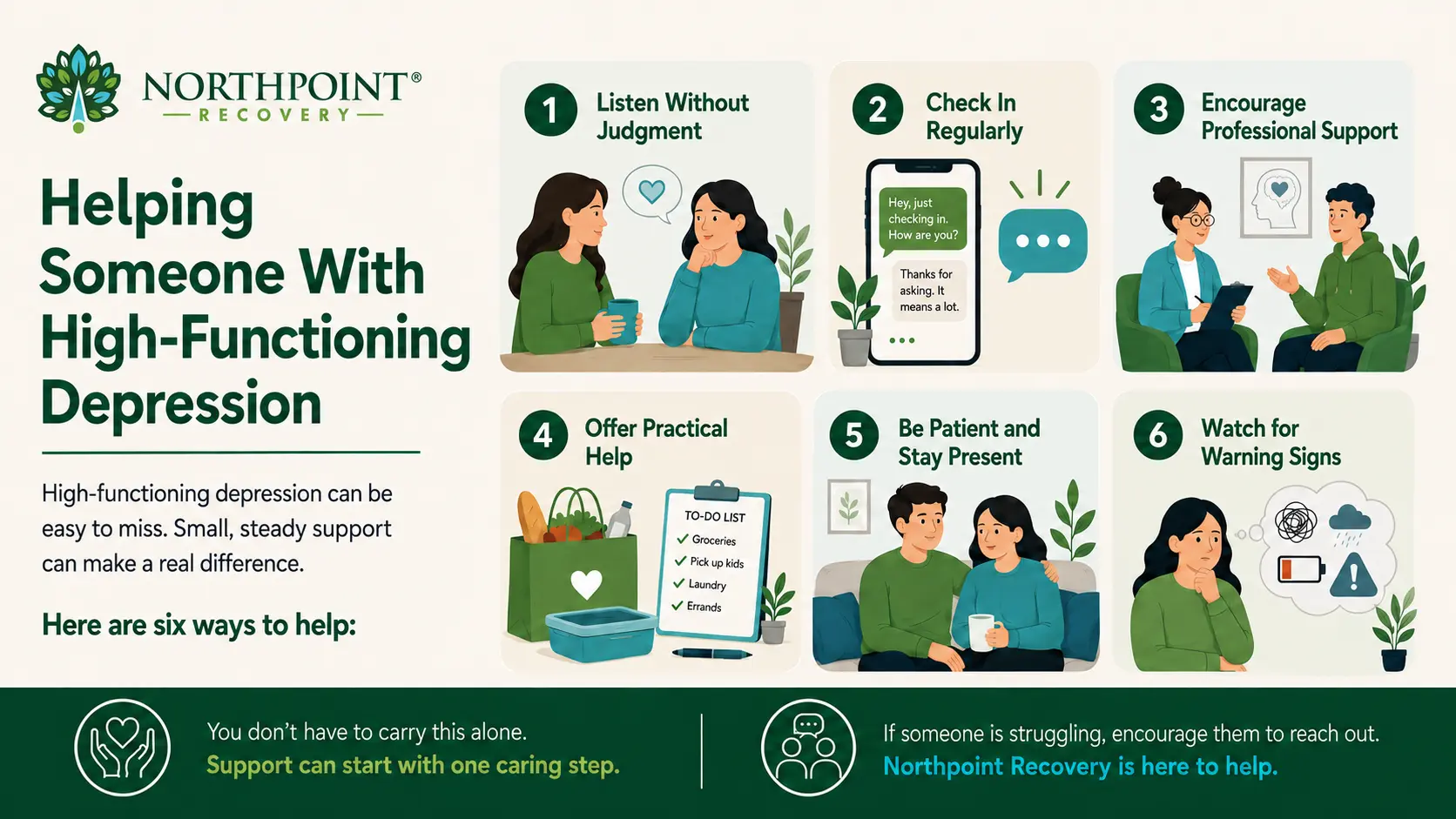
If you suspect that someone you know is dealing with high-functioning depression, offering support is crucial. Here’s how you can help:
Listen Without Judgment
Let the person know you’re there for them, and offer a safe space for them to share their feelings. Avoid minimizing their emotions or offering quick fixes. Often, simply listening is more valuable than offering solutions.
Encourage Professional Help
Because high-functioning depression can go undiagnosed for years, suggesting that the person see a therapist or counselor can be life-changing. Mental health professionals can provide strategies to manage depression and prevent it from worsening.
Check-In Regularly
People with high-functioning depression may feel alone or disconnected from others. Regularly checking in, even with a simple text or call, can help them feel supported and less isolated.
Be Patient
Recovery from depression doesn’t happen overnight, and the individual may have good days and bad days. Being patient and consistent in your support can make a big difference in their recovery journey.
Offer Practical Help
High-functioning depression can make daily tasks feel overwhelming. Offering to help with specific tasks, like running errands or preparing meals, can provide relief without putting too much pressure on the person to ask for help themselves.
The Impact of Feeling Alone with High-Functioning Depression
One of the most profound aspects of high-functioning depression is the feeling of being alone. Even though someone might be surrounded by friends, family, or colleagues, they may feel emotionally isolated. This sense of loneliness can exacerbate depressive symptoms and make it harder to reach out for help.
Feeling alone is often compounded by the misconception that people with high-functioning depression don’t need support because they “seem fine.” This makes it even more important to check in on those who appear to be managing well. Many people suffering from this disease fear being a burden, which can prevent them from seeking the help they need.
Breaking the Cycle
Recognizing and addressing high-functioning depression is essential for breaking the cycle of emotional suffering that often goes unnoticed. Without intervention, it can persist for years, gradually eroding a person’s mental and physical health. By understanding the signs and offering support, both individuals experiencing depression and their loved ones can take proactive steps toward mental health recovery. This might include seeking professional therapy, establishing a supportive network, and incorporating self-care practices that address emotional well-being.
Depression, in any form, is a serious condition that shouldn’t be ignored, as it can worsen over time if left untreated. However, with the right support and depression treatment, whether through counseling, medication, or lifestyle changes, individuals can regain their sense of well-being and happiness. It’s important to remember that recovery is possible, but it starts with recognizing the problem and being willing to take the necessary steps toward healing.
Frequently Asked Questions About High-Functioning Depression
1. Is high-functioning depression a real diagnosis?
No, high-functioning depression isn’t a formal clinical diagnosis. It’s a descriptive term for depression someone hides while still managing work, relationships, and daily responsibilities. The underlying condition is often persistent depressive disorder or major depressive disorder, which is why a professional assessment matters — the label describes how it looks from the outside, not what’s happening clinically.
2. What’s the difference between high-functioning depression and dysthymia?
Dysthymia — now called persistent depressive disorder — is a formal diagnosis defined by low-level depression symptoms that last at least two years. High-functioning depression is an informal term for depression that someone masks while continuing to function. The two often overlap, but they aren’t the same thing: one is a clinical diagnosis, the other is a description of how depression can present.
3. Can you have depression and still function normally?
Yes. Many people with depression continue to meet their responsibilities at work, at home, and socially, even while struggling internally. Functioning on the outside doesn’t mean the depression is mild or that support isn’t needed — it often means the person is working harder than others realize to keep up.
4. Is high-functioning depression the same as high-functioning anxiety?
No, though they can look similar and sometimes occur together. High-functioning depression centers on persistent low mood, fatigue, and loss of enjoyment, while high-functioning anxiety centers on excessive worry, restlessness, and a sense of being on edge. A person can experience both at the same time.
5. How is high-functioning depression treated?
Treatment is similar to treatment for other forms of depression and may include therapy, medication, or a combination of both, along with lifestyle and self-care changes. Because the condition can go unrecognized for a long time, the most important step is often simply reaching out to a mental health professional for an assessment.
6. When should someone seek help for high-functioning depression?
It’s worth reaching out any time low mood, fatigue, loss of enjoyment, or self-criticism has lingered and started affecting quality of life — even if daily responsibilities are still getting done. You don’t need to be in crisis to deserve support. If there are thoughts of self-harm, seek immediate help by calling or texting 988.
Take the First Step Toward Mental Health
If you’ve been holding everything together while quietly struggling, that’s not a sign you’re fine — it’s a sign you’ve been carrying more than anyone should have to on their own. You don’t need to reach a breaking point to deserve support.
Northpoint’s mental health treatment is built for exactly this: real, professional care that fits around your work, relationships, and daily life instead of pulling you away from them. You keep your routine — you just stop facing it alone.
Our team is ready when you are. Contact us today to learn more.