


Recovery asks a lot of a person. It calls for new routines, honest conversations, and the slow work of rebuilding trust in yourself and the people around you. Somewhere in that process, many people find comfort in an unexpected place: the calm, nonjudgmental company of an animal.
You may have heard a treatment center mention therapy dogs, or wondered whether spending time with animals could support your own recovery. Animals can help. They simply help in a different way than a lot of headlines suggest. This guide explains what pet therapy is, what the research actually shows, and how the connection it offers fits into lasting recovery.
Key Takeaways:
- Pet therapy, also called animal-assisted therapy, is a guided, goal-directed part of treatment — not a replacement for counseling or medical care.
- It supports recovery by lowering stress, easing anxiety, and helping people feel safe enough to open up.
- The research is promising but still early, so it works best alongside proven, evidence-based therapies.
- It is different from owning a pet, a service animal, and an emotional support animal in ways worth understanding before you decide.
- Music therapy works best as one part of a complete, personalized treatment plan, alongside counseling and other evidence-based care.
What Is Pet Therapy (Animal-Assisted Therapy)?
Pet therapy, also called animal-assisted therapy, is a structured, goal-directed practice that brings trained animals into the treatment process to support emotional, social, and physical healing. A therapist or trained handler guides each session toward specific goals, which is what separates it from having a pet at home or petting a friendly dog on the street.
To put it simply: being in recovery can feel stressful, and sometimes, having a pet rest their head on your leg offers a level of comfort humans don’t always feel from one another.
Dogs are the most common animals used in this kind of therapy, though horses, and sometimes smaller animals, show up in programs too. Sessions can happen one-on-one or in a group, and they take place in many settings, from residential programs to outpatient offices. In every case, the animal is a support to the work, not the work itself. Pet therapy is meant to sit alongside counseling and other proven treatments, never to replace them.
Therapy Animal vs. Service Animal vs. Emotional Support Animal
These three terms get used interchangeably, but they mean different things. Knowing the difference helps you set the right expectations and ask the right questions.
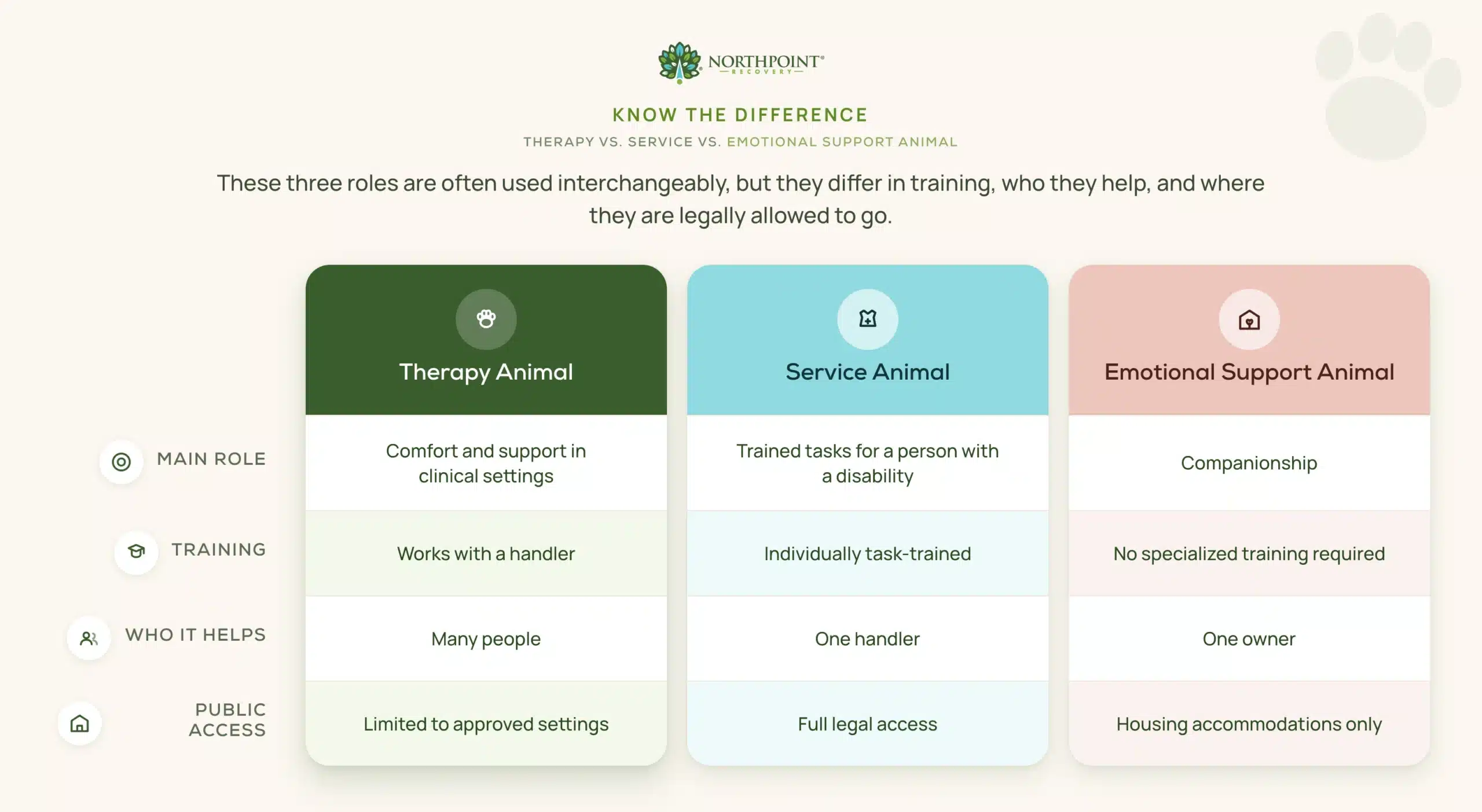
In short, a therapy animal supports a group through treatment,
Does Pet Therapy Help With Addiction Recovery?
Pet therapy can help with addiction recovery, though it works best as a complement to evidence-based treatment rather than a treatment on its own. Time with a therapy animal can lower stress, ease anxiety, and make it easier to open up, which strengthens the parts of recovery that do the heavy lifting.
It helps to set expectations early. While pet therapy is not a cure and should not be the only form of therapy you receive in a treatment program, it can make the hard parts of recovery feel a little more approachable. For someone who feels guarded, exhausted, or unsure about treatment, a gentle animal in the room can be the thing that helps them stay, settle in, and try.
What Does the Research Say?
The research on pet therapy for addiction is promising, though still early. Studies have found benefits for people in residential and inpatient care, including those managing both addiction and a mental health condition, but the field is young and most studies are small.
Researchers who reviewed the available studies found the results encouraging while noting real limits, with few large or tightly controlled trials so far. That is an honest picture worth keeping in mind. Pet therapy shows enough benefit to be a meaningful part of some treatment plans, and it is not a substitute for counseling, medical care, or the other approaches known to help people recover.
How Does Pet Therapy Support Recovery?
The benefits of pet therapy come down to connection, calm, and engagement. Spending time with an animal can shift how a person feels in the moment, making it easier to participate in treatment that supports long-term change. Here are the main ways it tends to help.
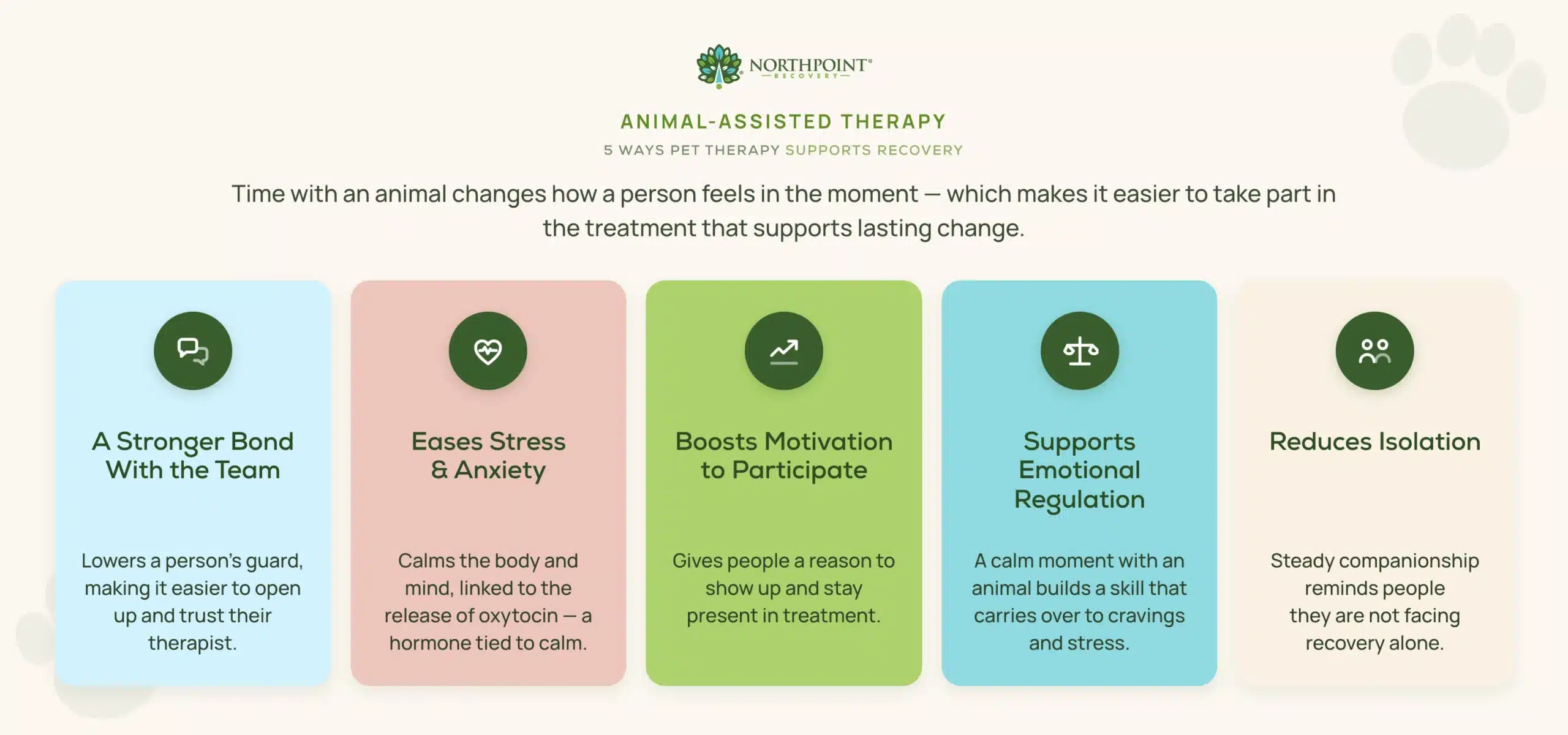
Builds a Stronger Bond With the Treatment Team
Animals help lower people’s guard, which makes the relationship with a therapist easier to build. When someone feels safer and more at ease, they open up more fully, and that working relationship is one of the strongest predictors of whether a person stays in treatment and reaches their goals.
Eases Stress and Anxiety
Time with an animal can calm the body as well as the mind. Interacting with animals has been linked to lower stress and the release of oxytocin, a hormone tied to bonding and a sense of calm. Researchers studying human-animal interaction have pointed to these physiological effects as a reason why time with animals can feel so soothing.
Boosts Motivation to Participate in Treatment
Caring for and interacting with an animal gives people a reason to show up and stay present. In one residential program for people managing both a substance use disorder and a mental health condition, a structured dog-assisted therapy program improved daily living skills and reduced impulsivity over the course of treatment.
Supports Emotional Regulation
A quiet moment with an animal is a chance to slow down and steady yourself. Noticing what you feel while staying calm is a skill that carries over into cravings, conflict, and stressful days.
Reduces Isolation and Loneliness
The steady presence of an animal can ease loneliness, which is a common relapse risk. That sense of companionship reminds people they are not facing recovery alone, even on the hard days.
What Happens During a Pet Therapy Session?
A pet therapy session is usually guided by a therapist or trained animal handler and built around a specific goal. Depending on the setting, a person might pet or groom the animal, practice simple commands, take a short walk, or sit quietly with them.
During the session, the therapist may use the interaction to help someone:
- Feel calmer and more present
- Practice trust, patience, or communication
- Talk about emotions that are hard to put into words
- Manage stress or cravings
- Build confidence through small, positive tasks
- Feel more comfortable participating in therapy
The animal isn’t the treatment by itself. Instead, it can make the therapeutic setting feel safer and less intimidating. In addiction recovery, that sense of calm and connection may help someone stay engaged, practice emotional regulation, and build healthier ways of responding to stress.
What If I’m Nervous Around Animals?
It’s okay to feel unsure before a pet therapy session. You won’t be expected to interact with the animal in a way that feels uncomfortable. The therapist or handler should explain what to expect, answer questions, and let you participate at your own pace.
You can usually start by observing from a distance, sitting nearby, or choosing not to touch the animal. Allergies, fears, cultural preferences, and past experiences should also be considered before the session begins.
Pet therapy is meant to support treatment, not create added pressure. The goal is to offer a calm, structured interaction that may make it easier to feel present, open up, or take part in the rest of the recovery process.
How Pet Therapy Fits Into a Full Treatment Plan
Pet therapy is usually one part of a broader treatment plan. It doesn’t replace counseling, medical care, medication, or other evidence-based therapies. Instead, it can support the work happening in those areas. A calm interaction with an animal may help someone settle before a difficult therapy session, practice emotional regulation, or feel more comfortable connecting with others.
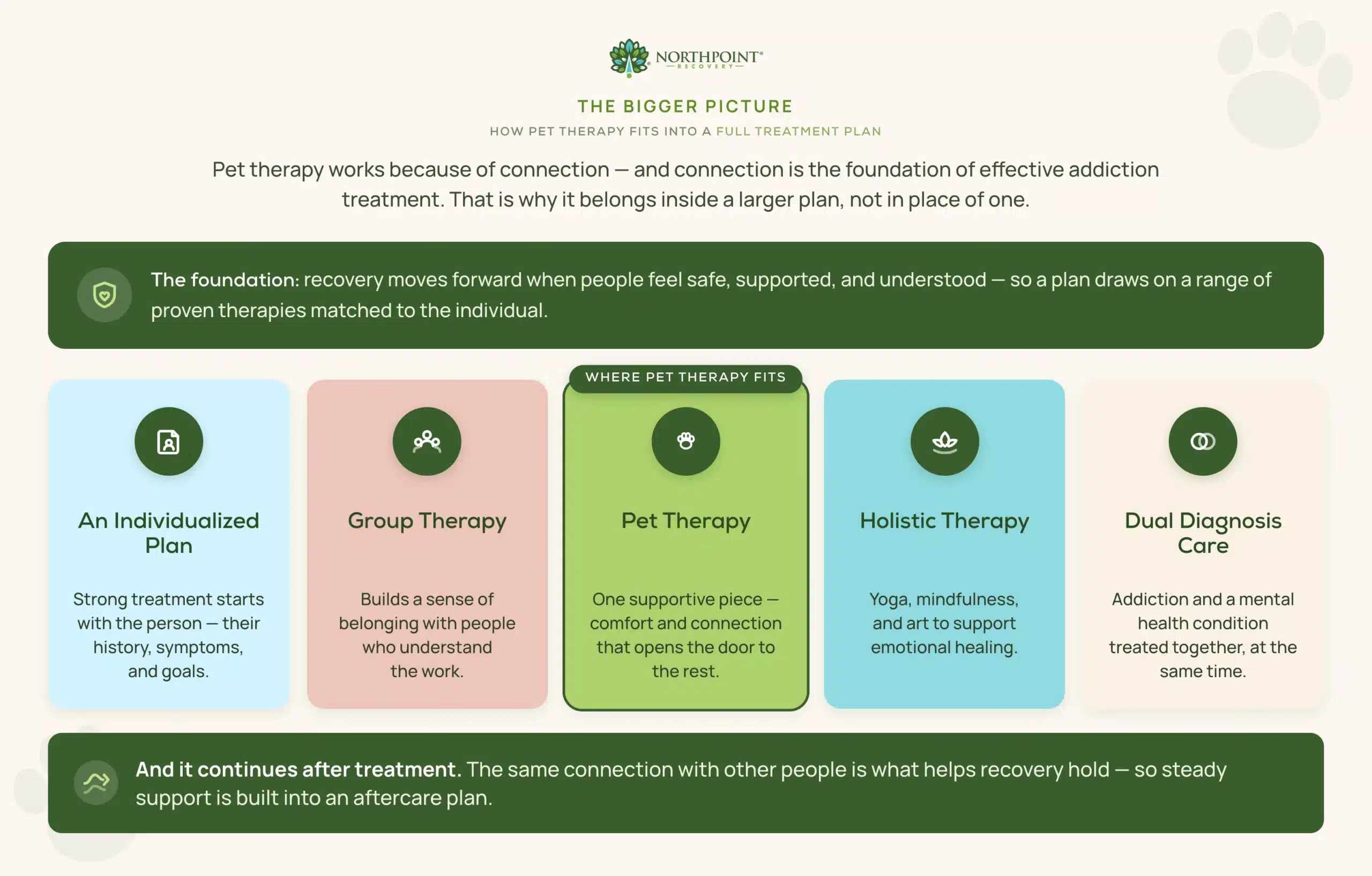
Not everyone will respond to pet therapy in the same way, and that’s okay. Treatment teams can help determine whether it fits a person’s needs, comfort level, and recovery goals. When it does, pet therapy can offer another safe way to build trust, manage stress, and stay engaged in treatment.
How Do I Know If Pet Therapy Is Right for Me?
Pet therapy may be worth considering if being around animals helps you feel calmer, more grounded, or less guarded. It can also be helpful if traditional therapy feels intimidating or if you find it easier to connect through shared activities rather than conversation alone.
Before taking part, consider whether you:
- Feel reasonably comfortable around animals
- Don’t have allergies that would make the session unsafe
- Want another way to practice trust, patience, or emotional regulation
- Think an animal’s presence could help you feel more at ease in treatment
- Are willing to try the experience without expecting it to work a certain way
It’s also okay if pet therapy doesn’t appeal to you, there are other holistic therapies to try. Fear of animals, past experiences, sensory concerns, allergies, or personal preferences may make another type of therapeutic activity a better fit.
FAQs About Pet Therapy
1. What animals are used in pet therapy?
Dogs are the most common animals used in pet therapy because they are easy to train and naturally social. Horses are also used, in a practice often called equine therapy, and some programs include smaller animals. The right fit depends on the setting and the goals of the session.
2. Is pet therapy covered by insurance?
Coverage varies. Pet therapy is usually offered as one part of a broader treatment program rather than a standalone service, so it is often folded into the cost of care. The best way to know what your plan covers is to verify your benefits with the treatment center directly.
3. Can I bring my own pet to rehab?
Most treatment programs don’t allow personal pets, since they need to manage safety, allergies, and care for everyone in the program. Some facilities offer their own pet therapy or animal-assisted activities instead. If having your pet nearby matters to you, ask about a program’s policy before you enroll.
4. Does pet therapy work for anxiety and depression, too?
Pet therapy has shown benefits for anxiety and depression, which often occur alongside addiction. Easing stress and building connection can support mental health as well as recovery. As with addiction, it works best as one supportive piece of a complete treatment plan.
Finding the Right Support for You
Pet therapy is just one of many ways treatment can meet a person where they are. What matters most is not any single therapy, but a plan built around you — your history, your struggles, and what helps you feel steady enough to do the work.
At Northpoint Recovery, care starts with the individual. Our drug addiction, alcohol addiction, and mental health treatment plans draw on a range of evidence-based and holistic therapies, matched to your needs rather than pulled from a one-size-fits-all template. The goal is simple: to help you feel safe, supported, and understood at every step of recovery.
If you or someone you love is ready to take that step, contact us today to talk through your options and build a plan that fits your life.