


Alcohol is the most common addiction in Nebraska, and it’s more common there than in most of the country. About 12% of Nebraska adults have an alcohol use disorder, above the national rate, and 1 in 4 adults binge drink, one of the highest rates in the U.S. Drug overdose deaths, on the other hand, are far lower than the national average, though methamphetamine now causes nearly as many overdose deaths in Nebraska as opioids.
Here’s what the latest data shows about addiction in Nebraska, how it compares with the rest of the country, and where to find help.
Key Takeaways:
- Alcohol use disorder is the most common addiction in Nebraska, affecting about 11.9% of adults, compared with 10.6% nationally.
- One in four Nebraska adults binge drinks, the 8th highest rate among U.S. states.
- Nebraska’s alcohol-related death rate is significantly higher than the national rate.
- Overdose deaths in Nebraska are about one-third of the national rate, but meth causes nearly as many overdose deaths as opioids.
- About 4 in 5 Nebraska adults who need substance use treatment don’t receive it.
What Is the Most Common Addiction in Nebraska?
Alcohol is the most common substance people become addicted to in Nebraska. According to SAMHSA’s 2023–2024 state estimates, about 11.9% of Nebraska adults, or roughly 176,000 people, had an alcohol use disorder in the past year. Nationally, the rate was 10.6%.
Nebraskans are also more likely to drink in the first place. About 51% of Nebraskans 12 and older drank alcohol in the past month, compared with about 47% nationally. Drug use tells a different story, with most measures at or below the national average.
| Measure | Nebraska | United States |
|---|---|---|
| Alcohol Use Disorder, Past Year (Adults) | 11.9% | 10.6% |
| Alcohol Use, Past Month (Ages 12+) | 51.1% | 47.1% |
| Marijuana Use, Past Year (Ages 12+) | 17.1% | 22.0% |
| Opioid Misuse, Past Year (Ages 12+) | 2.5% | 2.9% |
| Methamphetamine Use, Past Year (Ages 12+) | 1.0% | 0.9% |
Source: SAMHSA, National Surveys on Drug Use and Health, 2023–2024 state estimates.
Most Common Substances of Concern in Nebraska
Alcohol stands apart in Nebraska, but other substances still cause serious harm. Here’s how each one affects the state.
Alcohol and Binge Drinking
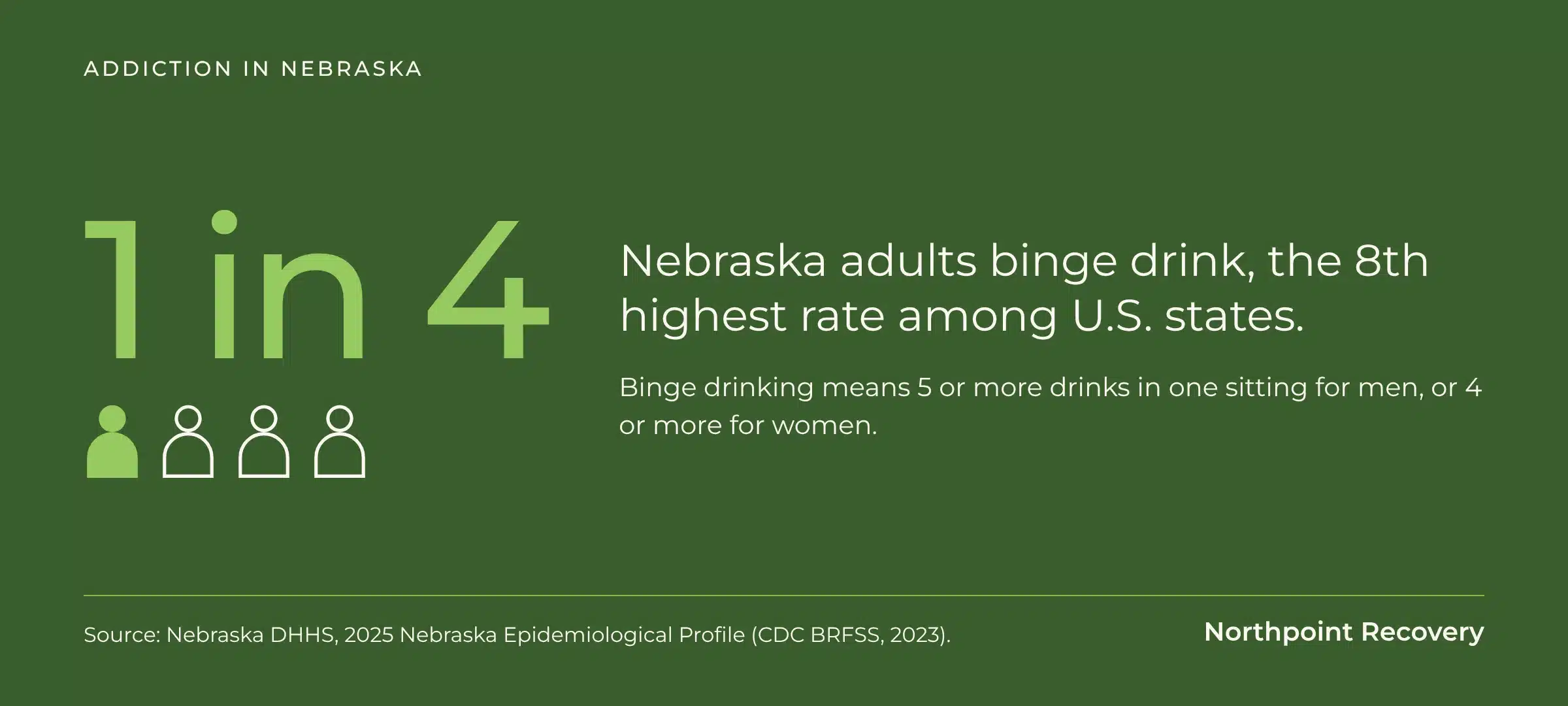
Drinking is woven into social life in Nebraska, from tailgates to weddings to weekends at the lake. That can make heavy drinking feel normal. According to the Nebraska Department of Health and Human Services’ 2025 epidemiological profile, 1 in 4 Nebraska adults reported binge drinking in 2023, the 8th highest rate in the country. Binge drinking means having five or more drinks in one sitting for men, or four or more for women.
Nebraskans also tend to underestimate the risk. Only 40% of Nebraska adults saw great risk in binge drinking once or twice a week, compared with 46% of adults nationally.
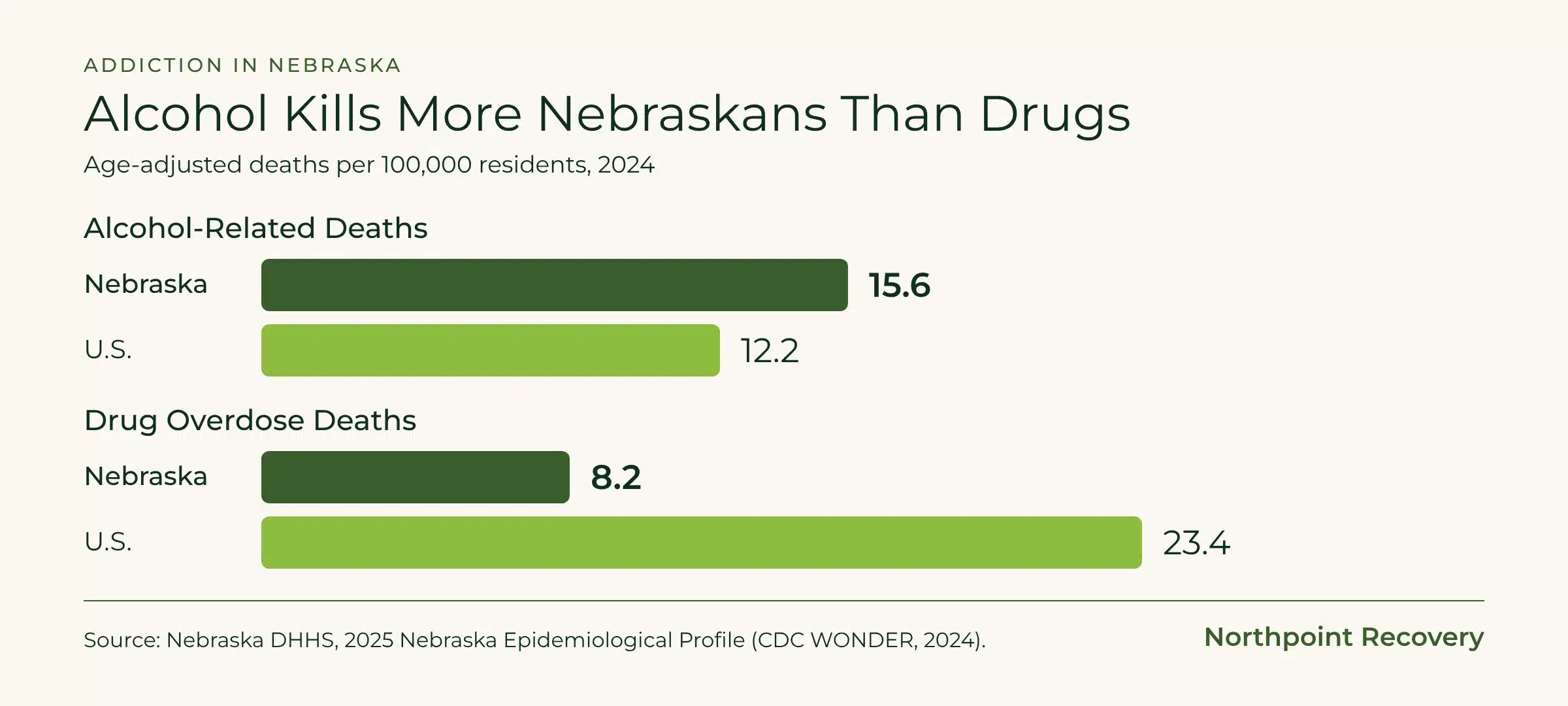
The consequences are real. Nebraska’s alcohol-related death rate was 15.6 per 100,000 residents in 2024, compared with 12.2 nationally, and adults ages 45 to 64 were most affected. In 2023, 31% of fatal crashes in Nebraska involved an alcohol-impaired driver. Long-term heavy drinking can also lead to serious conditions like wet brain syndrome, and quitting suddenly can cause dangerous withdrawal, including delirium tremens. Learn more about alcohol addiction treatment.
Methamphetamine
Meth use in Nebraska is about the same as the national rate, with roughly 1% of Nebraskans 12 and older using it in the past year. But it’s one of the deadliest drugs in the state. From 2023 to 2024, psychostimulants like meth caused overdose deaths at a rate of 3.0 per 100,000 Nebraskans, the same rate as fentanyl and other synthetic opioids.
Meth can cause paranoia, aggression, heart problems, and lasting damage to the brain and body. There are no FDA-approved medications for meth addiction, but behavioral therapies can help people stop using and stay in recovery.
Opioids and Fentanyl
Opioid misuse is lower in Nebraska than nationally, at 2.5% of people 12 and older compared with 2.9%. Still, opioids remain the leading cause of overdose deaths in the state, at 3.8 deaths per 100,000 residents from 2023 to 2024, with most involving fentanyl and other synthetic opioids. Treatment for opioid addiction often includes medications that ease withdrawal and cravings along with therapy.
Marijuana
Recreational marijuana remains illegal in Nebraska, and use is lower than the national rate. About 17.1% of Nebraskans 12 and older used marijuana in the past year, compared with 22.0% nationally. Even so, some people develop cannabis use disorder, especially those who start young or use heavily. Learn more about drug addiction treatment.
Overdose Deaths in Nebraska
Nebraska has one of the lower overdose death rates in the country. In 2024, the state’s rate was 8.2 deaths per 100,000 residents, about one-third of the national rate of 23.4. Nebraska’s rate peaked at 11.8 in 2022 and has declined since.
But lower doesn’t mean low risk. From 2023 to 2024, 327 Nebraskans died of drug overdoses, and 84% of those deaths were unintentional. Adults ages 25 to 64 had the highest overdose death rates, and men died at nearly twice the rate of women. If someone you love uses opioids or other drugs, keeping naloxone (Narcan) on hand and knowing the signs of an overdose can save a life.
Why So Many Nebraskans Don’t Get Treatment
Like most states, Nebraska has a large treatment gap. In 2023–2024, about 81.5% of Nebraska adults who needed substance use treatment didn’t receive it, roughly 229,000 people.
People go without care for many reasons. When heavy drinking is common, it can be hard to see when it has become a problem. Others worry about cost, stigma, or time away from work and family. In rural parts of the state, the nearest treatment program may be hours away.
If someone you care about is struggling, you can make a difference. Our guide for parents of adult children with addiction covers how to encourage treatment without enabling, and a professionally guided intervention may help when conversations keep stalling.
Signs of Alcohol Use Disorder
Because drinking is so common in Nebraska, it can be hard to know when it has crossed into addiction. Doctors look for a pattern of problems over the past year, such as:
- Drinking more, or for longer, than you meant to
- Wanting to cut back but not being able to
- Spending a lot of time drinking or recovering from drinking
- Having strong cravings
- Falling behind at work, school, or home because of drinking
- Continuing to drink even when it causes problems in your relationships
- Giving up activities you used to enjoy
- Drinking in risky situations, like before driving
- Continuing to drink despite health or mental health problems
- Needing more alcohol to feel the same effect
- Having withdrawal symptoms, like shakiness, sweating, or anxiety, when you stop
Having two or more of these signs can point to an alcohol use disorder. The more signs someone has, the more severe it tends to be. If you’re not sure, a confidential addiction quiz can help you sort through what you’re noticing.
Binge Drinking vs. Alcohol Use Disorder
Binge drinking and alcohol use disorder aren’t the same thing. Many people who binge drink don’t meet the criteria for addiction. But regular binge drinking raises the risk of developing an alcohol use disorder, along with accidents, injuries, and long-term health problems. If weekend drinking has started to feel hard to control, or if you’re drinking more to get the same effect, it may be time to take a closer look.
How Treatment Helps Substance Abuse Disorder
Addiction is treatable, and recovery is possible no matter how long someone has been struggling or how many times they’ve tried to quit on their own. Good treatment doesn’t just help someone stop drinking or using. It helps them understand why they started, rebuild the parts of life addiction took from them, and leave with a plan for staying well.
Getting Through Withdrawal Safely
For many people, the hardest part of quitting is the first few days. Medical detox gives people 24-hour medical support while their body adjusts, with medications to ease symptoms and keep them safe. This matters most with alcohol, since withdrawal can cause seizures and other dangerous complications without medical care. Starting in a safe, supervised setting also makes it far more likely someone will move on to the next stage of treatment instead of returning to use.
Therapy That Gets to the Root of the Problem
Detox addresses the physical side of addiction, but lasting recovery depends on what comes next. Through evidence-based therapies, people learn to recognize their triggers, manage cravings, and handle stress, conflict, and difficult emotions without turning to alcohol or drugs. Many people also live with anxiety, depression, or trauma, and treating those conditions alongside addiction gives them a much better chance of staying in recovery.
Care That Fits Your Life
Treatment isn’t one-size-fits-all. Inpatient treatment offers a structured, distraction-free setting with round-the-clock support, which can be the right fit for someone with severe addiction or an unstable home environment. Outpatient programs let people keep working, going to school, or caring for family while they attend treatment. For Nebraskans who live far from a treatment center, virtual outpatient care can make it possible to get help without a long drive.
Learning to Live Without Alcohol
In a state where drinking is part of so many social gatherings, one of the biggest worries people have is what life will look like without it. Treatment helps people practice saying no, rebuild friendships and routines that don’t center on alcohol, and rediscover activities they enjoy. Many people find that life in recovery is fuller than they expected.
Support That Continues After Treatment
Recovery doesn’t end when a program does. Aftercare planning helps people line up ongoing therapy, support groups, and relapse prevention strategies before they leave, so they’re not facing the transition alone. Families can be part of this too, learning how to support their loved one and rebuild trust.
Taking the first step can feel overwhelming, but you don’t need to have everything figured out to ask for help. Most people start with a single conversation about what they’re going through and what options make sense.
Frequently Asked Questions About Addiction in Nebraska
What Is the Most Common Addiction in Nebraska?
Alcohol. About 11.9% of Nebraska adults had an alcohol use disorder in 2023–2024, compared with 10.6% nationally. Alcohol is the most common substance people become addicted to both in Nebraska and across the U.S.
Is Binge Drinking a Problem in Nebraska?
Yes. In 2023, 1 in 4 Nebraska adults reported binge drinking, the 8th highest rate among U.S. states. Nebraska’s alcohol-related death rate is also significantly higher than the national rate.
Is Meth a Big Problem in Nebraska?
Meth use in Nebraska is about the same as the national rate, but meth is one of the state’s deadliest drugs. From 2023 to 2024, meth and similar stimulants caused overdose deaths at the same rate as fentanyl and other synthetic opioids.
Are Overdose Deaths High in Nebraska?
No. Nebraska’s overdose death rate was 8.2 per 100,000 residents in 2024, about one-third of the national rate. Still, 327 Nebraskans died of overdoses from 2023 to 2024, most of them unintentional.
How Many Nebraskans Need Addiction Treatment but Don’t Get It?
Most of them. In 2023–2024, about 81.5% of Nebraska adults who needed substance use treatment didn’t receive it, roughly 229,000 people.
Find Addiction Treatment in Nebraska Today
If you or someone you love is struggling with alcohol or drugs, help is close to home. Northpoint Recovery offers both inpatient and outpatient addiction treatment in Omaha, and outpatient treatment in Lincoln, so you can find the level of care that fits your life. Whether you’re ready to start treatment or just have questions, our team is here to help. Contact us today to take the first step.